
Inside Techvify | Episode 3: Can You Find Your Security Risks Before Attackers Do?
Authors
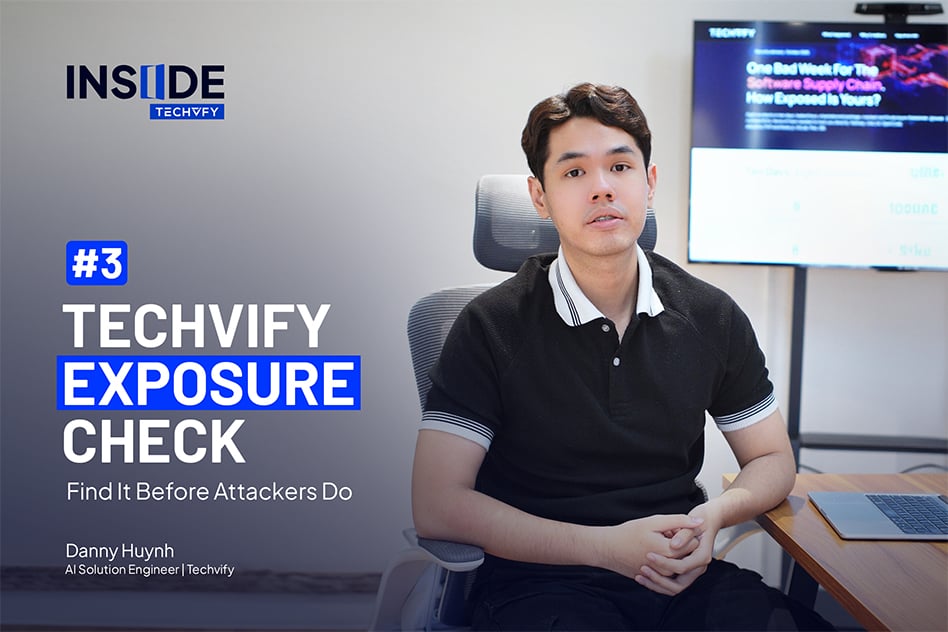
Inside Techvify returns with a question many engineering teams have been asking since PHP2Shell: can you find your security risks before attackers do? Episode 1 showed how we prepare our people, and Episode 2 opened up a working day with our AI-Augmented Engineering team. Episode 3 turns to security.
Our AI Solution Engineer Danny looks at what the PHP incident showed about where risk actually sits, and how an exposure check finds it before the next headline does.
A Flaw Hidden for Over a Decade
The code behind PHP2Shell had been in PHP for more than ten years. AI-assisted researchers turned it into a working exploit within weeks, and attackers were already trying it before the patch was out.
The lesson reaches well beyond PHP. The next flaw like this is unlikely to be in code your own team wrote. It is far more likely to sit in a library, a plugin or a tool you already trust, which is the part of a system teams tend to take on faith. Danny puts the question plainly: if the next one dropped tonight, would you know where you are exposed? We looked at where PHP still hides after the main servers are patched in an earlier article.
What an Exposure Check Covers
An exposure check is built to answer that question. In one day, Techvify maps three areas of a system:
- Dependencies: the libraries, packages and plugins the software relies on.
- Secrets and keys: the credentials and tokens that could give an attacker a way in.
- AI agents: everything your agents can reach, or in Danny's words, every door they can open.
From there, an agent-run penetration test shows what an attacker could really break, so risks are ranked by real exposure rather than left as a long list of theoretical findings.
Closed, With Proof
What the test finds gets closed, and recorded evidence shows it. That gives the team something concrete to point to when someone asks whether a fix holds, instead of an assumption. For a step-by-step view of the process, see How To Check Your Software Supply Chain Exposure in Practice.
Find It First
Patching the last incident is only part of the job. Knowing where you are exposed before the next one is what lets a team move on with confidence, and as Danny says to close the episode, it takes one call and one day.
Want to know where your systems stand? Request an exposure check from Techvify.