How to Master Taxi Mobile App Development in 2025
Loading...
The TECHVIFY Team is a group of experienced professionals passionate about technology and innovation.
Technology has changed how food delivery and transportation services work. Online taxi booking services are now common, and we all know about instant taxi mobile applications like Uber, Grab, and Ola.
The global taxi booking app market is expected to grow at a 4.2% CAGR and reach $283 billion by 2028. About 1,747.13 million people are expected to use ride-hailing services daily in 2024. The taxi booking business is a huge opportunity.
In this article, we will cover everything you need to know about taxi mobile app development. Here is a detailed breakdown.
A taxi booking app is a digital platform allowing users to book and pay for rides from drivers who use their cars or those provided by a taxi company. These apps can be built for Android, iOS, or both.
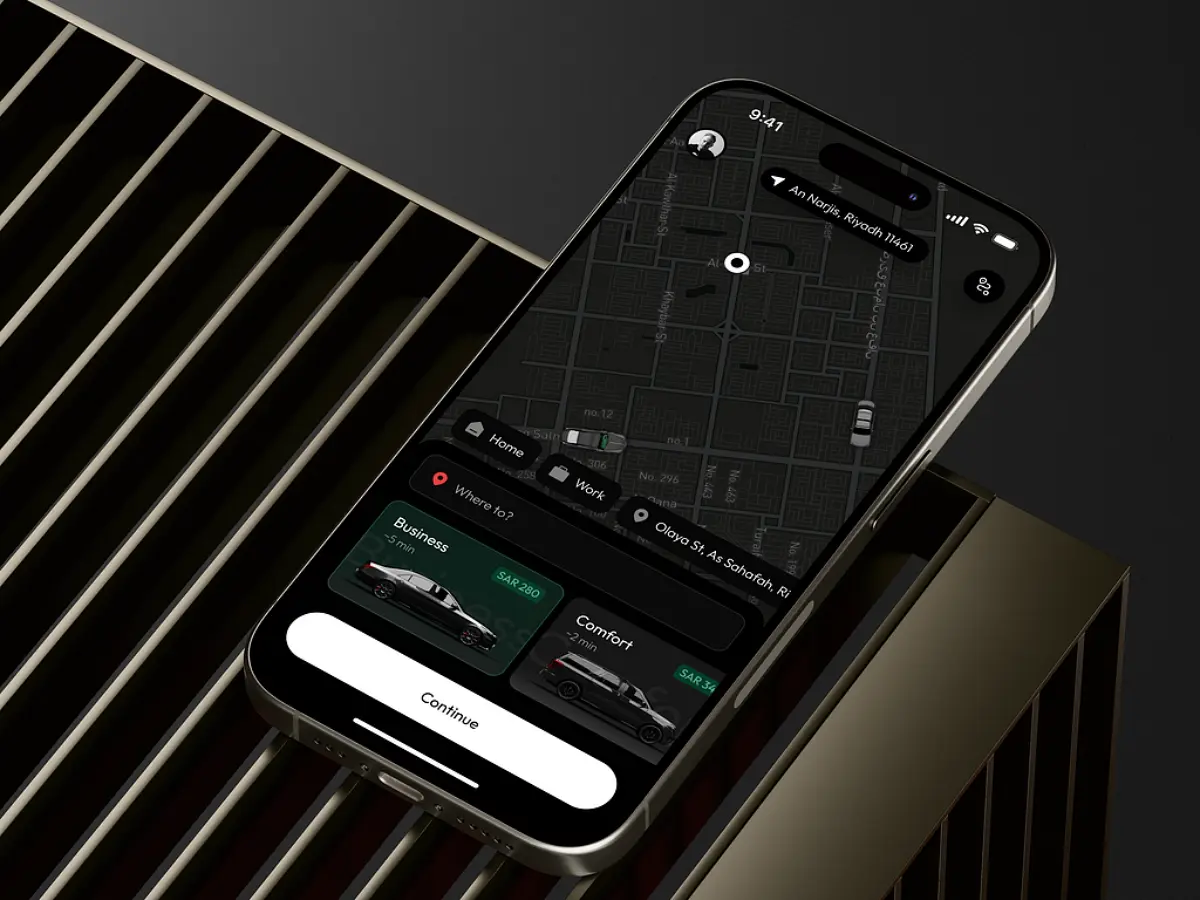
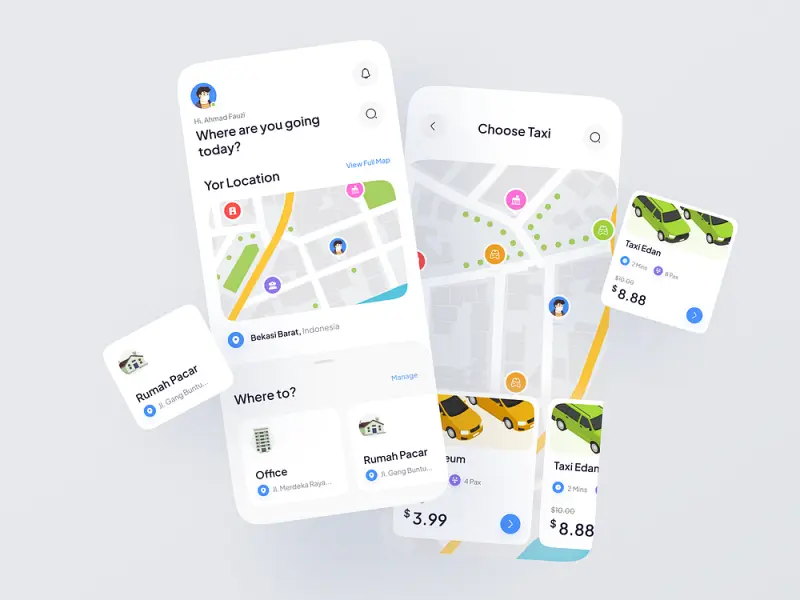
The main function of a taxi booking app is to connect passengers with nearby drivers quickly. Users can track the driver’s location and arrival time in real time. They can also see estimated trip fares and times before booking. The app lets users choose vehicle types and set specific ride preferences.
These apps, often called ride-sharing or ride-hailing services, offer a modern alternative to traditional taxi services. They eliminate the need to flag down a taxi on the street or call a dispatch center for a ride.
Learn More On:
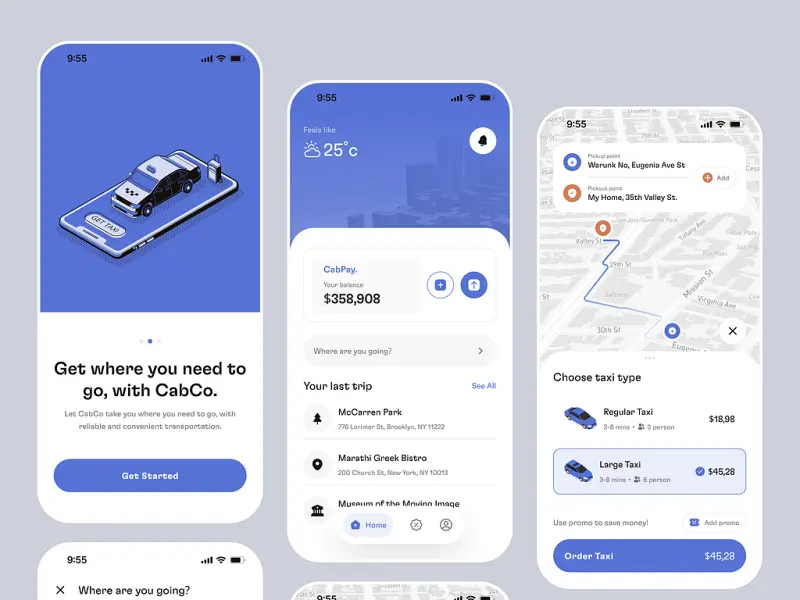
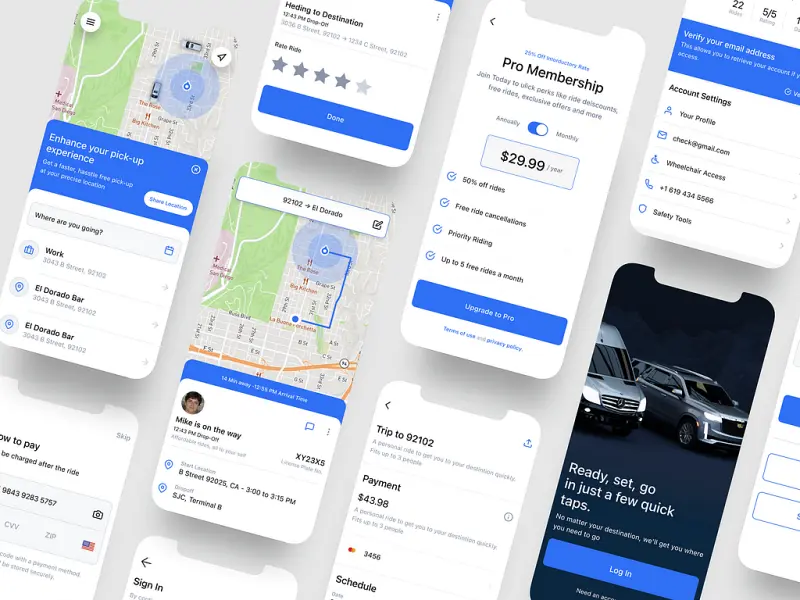
A taxi booking app consists of three main components: the rider app, the driver app, and the admin panel. Each has its features to make the service efficient for everyone involved. The complexity of these features affects the cost and time required to develop the app.
App owners must decide whether to create a minimum viable product (MVP) or a fully developed taxi mobile application. An MVP includes only the essential features needed for basic operation, while a complete version offers more advanced functionalities.
For Passengers:
For Drivers
For Admins:
Learn More On:
Developing an on-demand taxi booking app can significantly improve your business and boost your ROI. Here are some key benefits:
Have a Project Idea in Mind?
Get in touch with experts for a free consultation. We’ll help you decide on next steps, explain how the development process is organized, and provide you with a free project estimate.
Finally, we arrive at the most crucial part: the development phase. This stage is crucial to the success of your project, so it’s essential to execute it correctly.
Your basic concept should provide taxi services and better job opportunities for drivers. Think about how you can uniquely attract and satisfy users. For instance, Uber focuses on passenger needs by offering convenient pick-ups and drop-offs. Your idea should stand out and be well-promoted.
Carry out an in-depth analysis of the market, target audience, and competitors. This analysis should provide real data about market trends, user preferences, and competitors’ strengths and weaknesses. Use this information to refine your app concept and ensure it meets user needs.
If you lack the budget, look for investors. Consider crowdfunding campaigns or venture capital funds interested in your startup idea. The taxi mobile application development cost is high, so plan your budget carefully. Look for detailed budgeting information to guide your financial planning.
Once you have a great market data-driven concept and the funds to bring it to life, it’s time to list the features that will turn your idea into a functional mobile app for taxi services. Start with core features and expand functionality later.
Choosing the right taxi app development company is crucial. Start by examining their portfolio for similar projects to ensure they understand your industry. A diverse and high-quality portfolio indicates flexibility and capability. Detailed case studies showing successful outcomes can provide additional confidence.
Next, consider their experience. A longer track record often means more expertise. Check for specialization in mobile app development, especially in ride-sharing apps. Ensure the team has the necessary skills, including UI/UX design, front-end and back-end development, and quality assurance. Certifications from tech giants like Google or Apple can be a mark of quality.
Review their development approach. Understand their methodology, whether Agile or Waterfall and ensure they maintain transparency and use modern, scalable technologies.
Effective communication is essential. Evaluate their responsiveness and clarity during initial contact. They should commit to regular updates and be open to feedback. Ensure their communication tools and working style align with your expectations.
Creating an intuitive UI is essential for providing a positive UX. This design stage determines how your app will look and how easy it will be to use.
This complex and long-term stage significantly influences the taxi app development cost. Choosing the right technology stack is crucial.
Example Technology Stack:
Testing ensures your app works smoothly. A QA team should rigorously test the app before its launch. Publishing your app on the App Store and Google Play can be difficult. Ensure you follow all submission guidelines and requirements.
Start planning your promotion strategy early to make your taxi booking app profitable. Define your target audiences and tailor your marketing messages to each group. Launch segmented advertising campaigns on social media, search engines, and in-app platforms, highlighting specific benefits for drivers, passengers, and administrators.
Optimize your app store presence with relevant keywords, high-quality visuals, and positive reviews. Engage users through regular social media posts, influencer partnerships, and a blog with appropriate articles. Issue press releases, seek media coverage, and partner with local businesses and events to enhance visibility.
Implement referral programs with incentives and run promotional offers to encourage usage. Finally, use analytics to track performance and adjust your strategy based on user feedback.
Enhance your app regularly based on user feedback and behavior analysis. Regular updates will help meet user needs and keep your app competitive.
Pro Tip: Save money by starting with an MVP (Minimum Viable Product). Launch with essential features and add more as your app gains popularity and profitability. An MVP also helps gather early user feedback for improvements.
Ready to Develop Your Taxi Booking App?
Contact TECHVIFY’s experts for a free consultation. We’ll guide you through the development process, answer your questions, and provide a free project estimate.
Several well-known names dominate the cab booking platforms in the global taxi market. Learning from industry leaders can provide valuable insights if you’re considering a good taxi mobile app development idea.
Since 2012, Grab is a Singapore-based tech company offering ride-hailing, food delivery, and package delivery services throughout Southeast Asia. Grab provides various services within one mega platform: Motorbike taxis (GrabBike), private cars (GrabCar), premium vehicles (GrabPremium), and more.
Grab also has its e-wallet, GrabPay, which enables customers to make payments for services within the app. Grab competes fiercely with other global players in the taxi industry with a simplified user interface and strong customer support. It is expanding its services beyond transportation into e-commerce and other sectors.
Universally recognized as a pioneer in ride-hailing services, Uber was founded in 2009 by an America-based app development company. Uber’s services are available in more than 900 metropolitan areas worldwide.
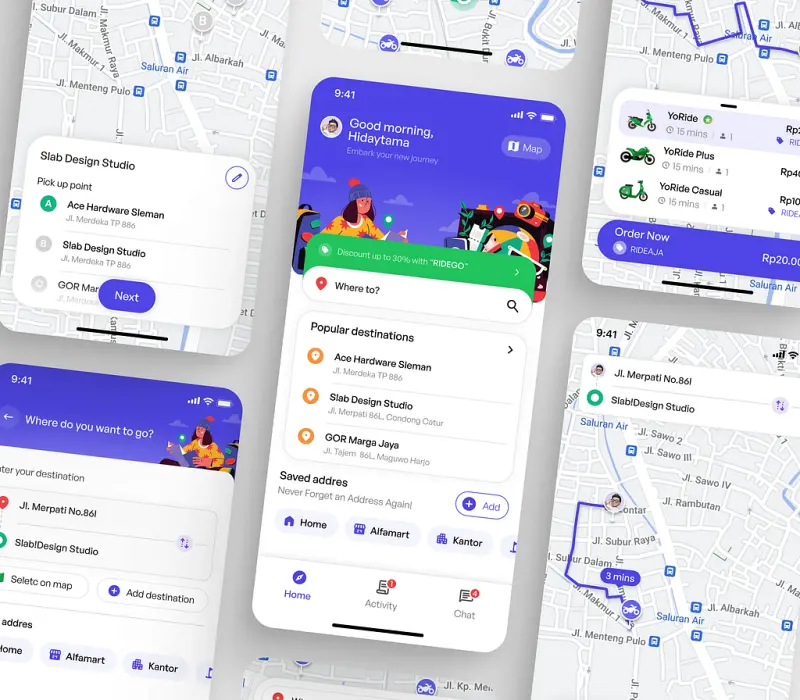
This “super app” offers a variety of ride options, including economy, premium, accessible vehicles, carpooling, and bike-sharing, all within a single platform. Regarding taxi mobile app development, many developers and organizations view Uber as a role model for their products.
Founded in December 2010, Ola Cabs is a prominent ride-hailing service headquartered in Bangalore, India, with services extending to over 250 cities in nations such as New Zealand, Australia, and the United Kingdom.
Ola Cabs offers various ride options, including economy, business class, premium, and shared rides. The “Ola Share” feature allows passengers to share rides with others heading in the same direction at a lower price. Ola also provides food delivery services (Ola Foods) and e-wallet options for payment (Ola Money).
Launched in 2012, DiDi is a Chinese taxi booking app with over 550 million users and an average of around 30 million daily rides. DiDi offers bike-sharing and carpooling options, and users can rent vehicles for periods at their disposal.
The platform supports multiple payment modes (cash, credit card, or DiDi’s e-wallet system) and various languages, catering to a diverse user base.
Known as Uber’s direct competitor, Lyft was established in 2012. Its primary markets are the United States and Canada. Lyft offers standard ride options, luxury cars, scooters, and bike-sharing services.
Additionally, Lyft provides a feature called “Round Up & Donate,” allowing users to round up fares to the nearest dollar and donate the difference to a charity they choose. Lyft has a good reputation for emphasizing local community engagement and driver welfare.
When starting a mobile taxi app development project, you must be prepared to face potential pitfalls. The task is risky and challenging, but the rewards can be high if executed correctly.
At some point, your app will need to handle large amounts of data. As your app becomes more popular, this data will increase. If your system can’t manage the load, the app may slow down, work incorrectly, or even crash.
This leads to user dissatisfaction. Dissatisfied users are less loyal, making it harder to monetize them.
Therefore, your taxi app must be able to handle peak loads. Here are some tips:
This might sound complex, but that’s why taxi booking app development can be expensive.
One key problem for taxi mobile application is the inaccuracy in determining the user’s or vehicle’s location. This can lead to situations where the driver cannot find the passenger, resulting in frustration for both parties.
The Consequences:
To avoid these issues, accurate and frequent location updates are crucial. For instance, Uber connects to the server every few seconds to provide the most accurate location data. If you plan to create a taxi booking app clone, consider implementing a similar strategy. Here are some tips:
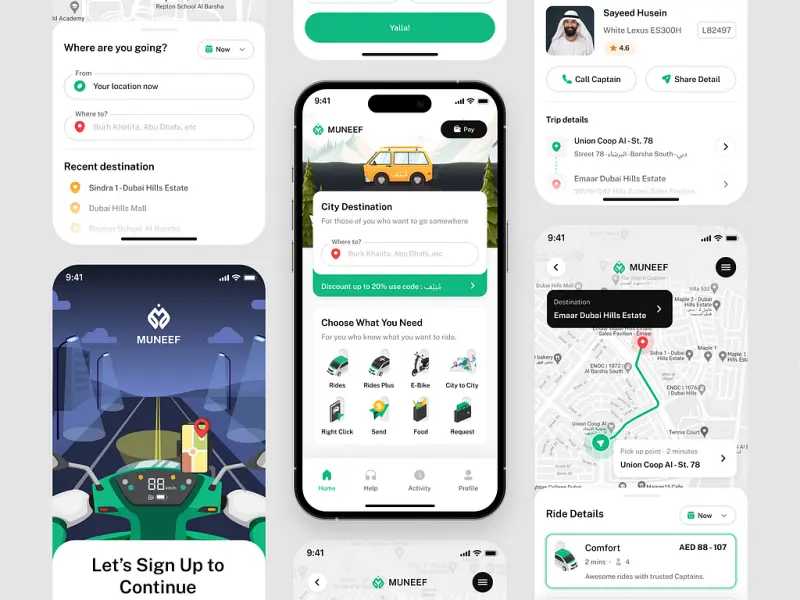
At first, your app may handle a small number of orders, but over time, it could grow significantly (since you’re aiming to create the best cab booking app on the market, right?).
Therefore, you need to ensure your project is scalable from the beginning. One good approach is to divide the program architecture into several key components, such as:
Advantages of This Approach:
Your taxi booking solution will surely allow users to pay online. Such a feature is crucial today; without it, competing with other players in the market is impossible. Ensuring secure, efficient payment processing is essential, but it comes with its own set of challenges.
Key Considerations:
By partnering with reliable payment processors and implementing best practices for data security, you can provide a seamless and secure payment experience for your users.
In your imagination, you draw the perfect picture: a user opens your online taxi booking application, finds a car, and gets to the specified destination in the time your service has predicted. However, in reality, things may be different.
Challenges:
Solutions:
Addressing these challenges requires sophisticated technology and constant real-time data monitoring to ensure the best possible user experience.
Don’t let these challenges intimidate you. You don’t have to solve these problems on your own. By hiring a professional taxi app development company, you can leverage their expertise to overcome these difficulties.
Speaking of such a team, why not consider TECHVIFY? Our experienced team is ready to help you build a robust and scalable taxi booking app that meets all your requirements.
The taxi booking industry offers a promising opportunity for innovation and growth. Developing a robust, user-friendly app can set you apart in this competitive market. This guide has covered everything you need to bring your taxi mobile app development idea to life, from essential features to development challenges.
However, building a successful app requires expertise. That’s where TECHVIFY comes in.
Ready to make your taxi booking app a game-changer? Let’s transform your vision into the next big thing.
TECHVIFY – Global AI & Software Solution Company
From Startups to Industry Leaders: TECHVIFY prioritizes results, not just deliverables. Accelerate your time to market and see ROI early with high-performing teams, AI (including GenAI) Software Solutions, and ODC (Offshore Development Center) services.