Loading...
The TECHVIFY Team is a group of experienced professionals passionate about technology and innovation.
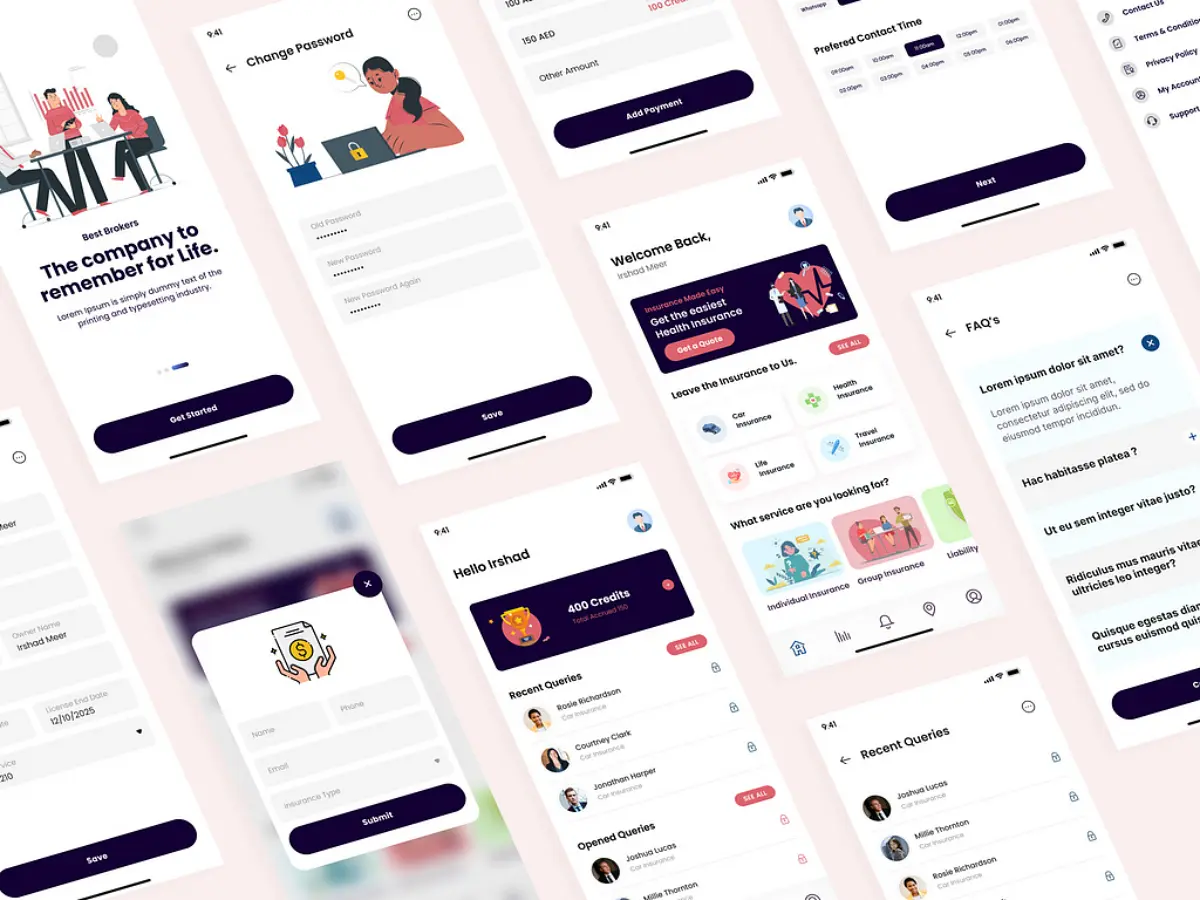
Developing insurance apps is now essential for staying competitive and enhancing client satisfaction.
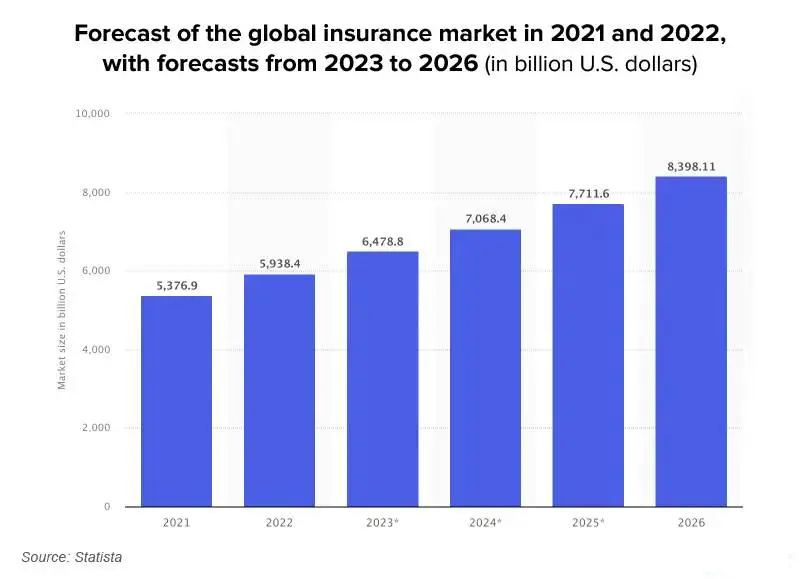
A recent forecast by Statista estimates the global insurance market will reach $8.4 trillion by 2026, positioning it as a major player in the business world.
Due to this digital transformation, both established companies and startups are now focusing on developing insurance mobile apps. Modern customers are increasingly using online services, including insurance products.
A mobile app development guide tailored to the insurance market is essential to explore these advantages.
This article will help you understand how to do Insurance Application Development, the key features, and the cost of development.
Owning an InsurTech product grants startups access to a market valued at over $2 trillion.
Mobile apps enable insurance providers to connect with a broader audience, offer personalized premiums, achieve notable growth, and enhance service efficiency.
Consider the following statistics that highlight the rapid expansion of the insurance industry:
This remarkable growth has attracted significant investments from venture capitalists.
Here are some key statistics on venture capital funding in InsurTech:
These figures indicate that the insurance market is expanding rapidly, and venture capital investors are eager to support startups in leveraging this growth.
More articles about the Insurance Industry:
Property insurance app development enables the creation of a robust mobile app for insuring property, jewelry, artwork, real estate, and more. The app allows users to choose appropriate policies, file claims promptly, receive regular reminders on property maintenance, and track property for damages.
Life insurance app development can simplify routine tasks for users. These apps allow users to select the right policy based on their needs, review the terms and conditions of available policies, complete the data-sharing process online, and use a secure payment gateway. Additionally, users can receive instant notifications, automatically calculate interest rates, and access 24/7 customer support.
Travel insurance app development offers a range of services to users. It minimizes risks in emergencies, covers unforeseen medical expenses, reimburses medical costs in accidents, provides claims against luggage loss and trip cancellations, and offers instant cross-border access in emergencies.
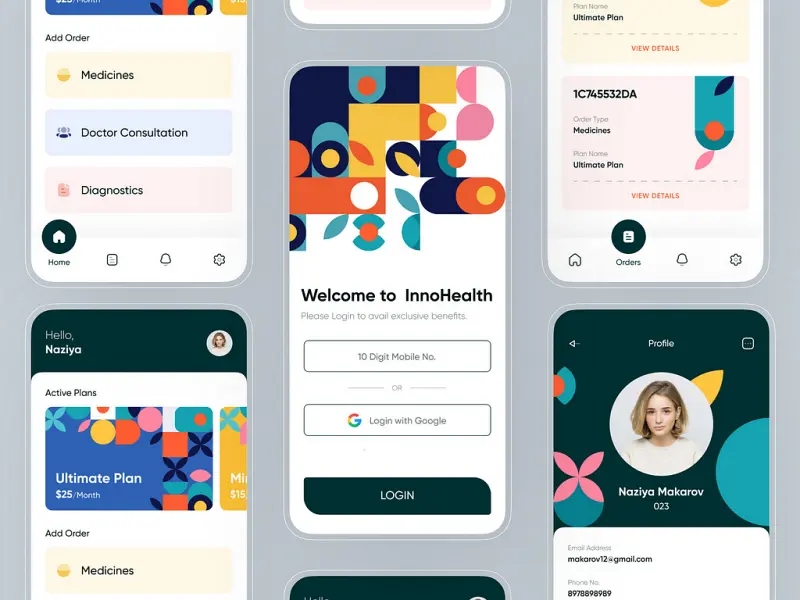
Vehicle insurance apps provide crucial support for users involved in accidents. These apps enable users to take and upload real-time pictures of the accident site, file a claim on the spot, get repair estimates, and access related services. Users can also upload relevant data, such as images, videos, documents, and police reports, and easily access important documents.
Health insurance app development provides a comprehensive mobile app for users. It offers the choice to get insurance across different medical disciplines, select preferred doctors, book real-time appointments, access documents, complete formalities online, search for appropriate health plans, and compare prices for multiple pharmacies and clinics.
Business insurance app development helps protect various business investments. These apps allow users to select the right insurance package based on their business size and risk nature, get instant claims on loss and fraud by easily uploading documents, and minimize losses by quickly settling insured events.
Looking to Outsource Development?
Contact TECHVIFY, Vietnam’s Leading Offshore Software Development & Outsourcing Company, for a consultation and development services.
Mobile insurance apps can save time for agents and customers by eliminating the need for office visits. To start developing an insurance app cost-effectively, consider creating a Minimum Viable Product (MVP). Focus on essential functionalities to test your app idea, gather user feedback, identify pain points, and refine features that resonate with your audience.
An insurance app should provide quick and convenient access to all policies. Users can review vehicle insurance details on their smartphones, eliminating the need for physical proof-of-insurance cards. The app should also allow users to update personal information and coverage details directly, ensuring accurate policy information. In emergencies, instant access to digital ID cards can facilitate interactions with law enforcement or during accidents.
Keep users informed about important updates, policy renewals, payment reminders, and relevant news. Personalize notifications based on user preferences, policy status, and location to ensure timely and relevant communication. This feature helps users stay engaged with their insurance policies and take timely actions to maintain coverage and manage risks.
Utilize geolocation technology to provide location-based services and information relevant to users’ insurance coverage. For example, users can receive alerts about severe weather events or natural disasters in their area, along with safety tips and instructions on filing insurance claims. Leveraging location-based services enhances user engagement and provides valuable assistance during emergencies.
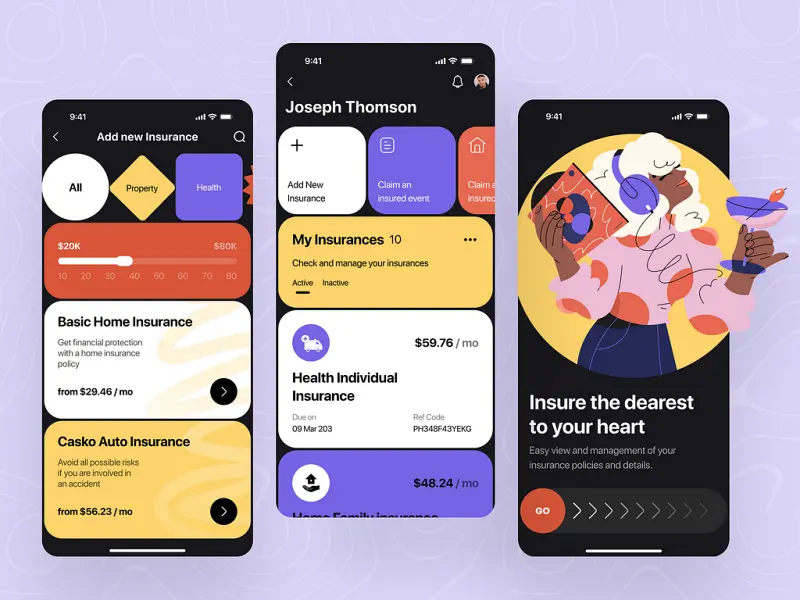
Developing a general insurance app requires creating a user-friendly payment process. Including a payment section enables users to input their card information and set up auto payments easily. Integrating multiple payment options, such as PayPal and digital wallets, enhances convenience and accessibility for customers with diverse preferences. Adopting strong security protocols such as encryption and two-factor authentication ensures the protection of users’ financial data, instilling trust and confidence in the app’s payment functionality.
It is essential to prioritize the security and privacy of user data. To protect sensitive user information and transactions, implement robust security measures and compliance standards within the app, such as encryption protocols, biometric authentication, and multi-factor authentication (MFA). Ensure adherence to data protection laws like GDPR and HIPAA to build trust and confidence among users regarding their data privacy rights and protections.
A key feature of mobile insurance applications is the ability to submit claims easily in case of an accident. The app enables insured individuals to quickly provide an accurate account of an incident and attach videos or pictures. Additionally, it can track location to facilitate more efficient assistance. This feature results in quicker claim processing and a better customer experience.
Learn More On:
Product owners, founders, or entrepreneurs often make several popular mistakes when they start building their products, here are 3 most popular mistakes you might encounter:
InsurTech, like FinTech, is regulated by several organizations. For example, in the United Kingdom, the service is overseen by the Financial Conduct Authority, whereas in Canada, it’s regulated by the Office of the Superintendent of Financial Institutions (OSFI). Regardless of your country of operation, follow these tips to remain legally compliant:
According to Forbes, a lack of a marketing budget is one of the top reasons startups fail. It’s common for InsurTech startups to focus on product development while neglecting marketing, which can result in a great product with no users.
Ensure you create a marketing budget that aligns with your business goals and can adequately finance the marketing plan necessary to target your audience. Your marketing budget should be two to three times the development cost. For instance, if developing your insurance application costs $75,000, your marketing budget should be between $150,000 and $225,000 annually.
Clarity is key to creating an effective product. Ensure you can clearly articulate the kind of insurance app you aim to create, your intended audience, and the aims you wish to achieve for users of your product. Before developing, take the following steps:
The discovery phase involves gathering information where a team conducts an initial analysis of the insurance market and the development processes involved. This phase is crucial as it ensures team members understand expected deliverables clearly. The steps involved in the discovery phase include:
Although some may skip this step, the discovery phase is vital for founders who aim to reduce overall costs, improve risk management, achieve ideal validation, and assemble the best-fit team for the development process.
The design process aims to illustrate how the application will function and appear. The prototype design can be used for various purposes, such as adjusting user flows, serving as a development guide, or presenting to potential investors for fundraising.
This stage is more fluid than others, as the output may require regular redesigns if the startup’s expectations are not met.
The blueprint created in the discovery phase will help the UI/UX designer understand the application’s business and technical needs.
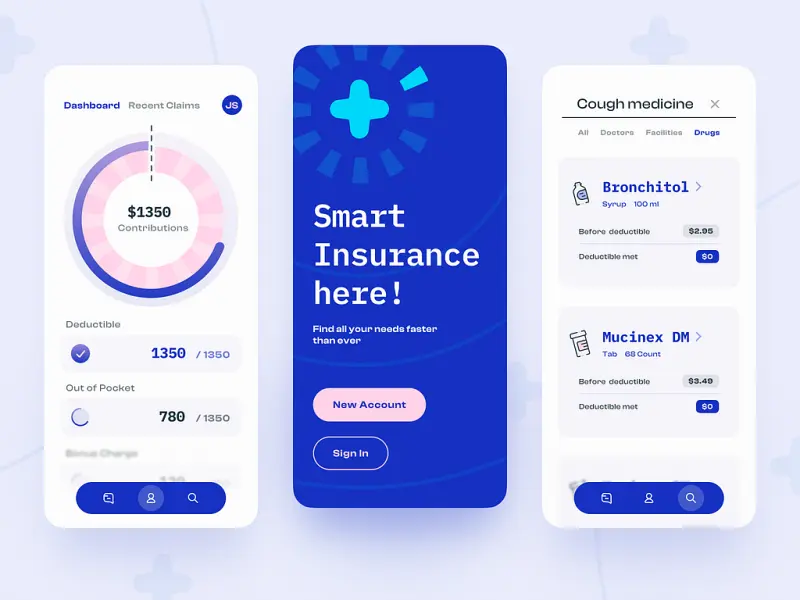
At the end of this step, you should have the following deliverables:
A Complete User Experience Wireframe
This wireframe outlines the app’s overall structure and flow, ensuring that all user interactions are logically placed and easy to navigate.
UI Design for Different Screen Types for Optimal Responsiveness
The UI design should accommodate various screen sizes and resolutions, ensuring a seamless experience across different devices.
An Interactive Prototype (Clickable Design)
This prototype allows users to interact with the app’s design, providing a realistic preview of the final product and helping to identify any usability issues.
An Original Figma Design File
The Figma design file will be the source of truth for the app’s design, including all elements, interactions, and design specifications.
This phase is crucial for aligning the visual and functional aspects of the app, ensuring that it meets user expectations and business requirements before moving on to development.
This phase involves transforming UI/UX designs into a functional mobile application through the efforts of back-end and front-end programmers. A project manager should oversee the process, setting clear milestones to ensure timely delivery.
Key Components:
Project Management:
Backend Development:
Frontend Development:
Quality Assurance (QA):
Security Testing:
After completing development and testing, the next phase is launching your app on both the Apple App Store and Google Play. However, the journey doesn’t end with the launch. It’s crucial to immediately start gathering and analyzing user feedback to pinpoint areas for improvement.
To ensure your app gains and retains a large user base, rapidly implement updates and enhancements based on the feedback you collect. The more users interact with your app, the more feedback you’ll gather, which is vital for continuous improvement.
Regularly incorporate user feedback, including complaints and suggestions, to refine and enhance the platform and your insurance offerings. This ongoing, iterative process helps keep your app relevant, valuable, and in line with user expectations.
The options are vast when choosing a technology stack for an insurance platform. Here’s a look at a stack that we recommend for fast-growing products:
| Type | Tech Stack |
|---|---|
| Backend | Node.js, Express.js, Laravel |
| Database | MySQL, MongoDB, Redis |
| Hosting | AWS, Vultr |
| Server | NGiNX |
| Mobile Development | React Native (cross-platform), Swift (iOS), Kotlin (Android) |
| UI/UX Design | Figma, Principle, Balsamiq |
| Management | Slack, Jira, Confluent |
This stack is designed to support scalability, reliability, and performance, making it ideal for rapidly growing insurance products.
To provide a rough estimate, the cost of developing an insurance app in Asia can range from $20,000 to $150,000. Several factors influence these costs, including the location of the app development agency, the UI/UX design, the feature list, the tech stack, and the development process.
In simple terms, a highly complex app with an extensive feature list will be more expensive to develop than a less complex app with minimal features. Here’s a breakdown of estimated costs and time frames based on app complexity:
| Insurance App Type | Estimated Cost of Development | Time Frame |
|---|---|---|
| Simple App | $20,000 to $40,000 | 3 to 6 months |
| Moderately Complex App | $50,000 to $100,000 | 6 to 8 months |
| Highly Complex App | $110,000 to $150,000 | 9+ months |
Why Choose Asia for Insurance App Development?
Asia is an excellent choice for insurance app development partners due to several reasons:
Choosing a development partner in Asia can provide a perfect blend of cost efficiency, quality, and timely delivery, making it an ideal region for insurance app development.
Mobile apps are transforming the insurance industry, opening up exciting opportunities for startups. With the market growing and InsurTech investments booming, there’s immense potential for innovation and customer engagement.
Focus on essential features like easy access to ID cards, notifications, location-based services, secure payments, and efficient claims processing. Ensure legal compliance, allocate a marketing budget, and validate your idea.
A well-planned Insurance Application Development process will help you create a standout app. Affordable development option in Asia can help you achieve your goals cost-effectively.
Ready to revolutionize your insurance business with a mobile app? Contact TECHVIFY for expert consultation and Insurance App Development services.
TECHVIFY – Global AI & Software Solution Company
From Startups to Industry Leaders: TECHVIFY prioritizes results, not just deliverables. Accelerate your time to market and see ROI early with high-performing teams, AI (including GenAI) Software Solutions, and ODC (Offshore Development Center) services.