Loading...
The TECHVIFY Team is a group of experienced professionals passionate about technology and innovation.
In the fast-paced and competitive world of hospitality, where customer expectations are sky-high, the industry faces numerous challenges. From tailoring experiences to managing shifting demand, these obstacles can seem overwhelming. However, Artificial Intelligence (AI) offers promising solutions by automating processes, boosting efficiency, and enhancing decision-making.
AI’s ability to analyze vast datasets, forecast trends, and make intelligent decisions is transforming hospitality operations. It enables highly personalized experiences, streamlines operations, improves customer service with chatbots and strengthens security measures. According to IndustryARC, the travel and hospitality AI market is projected to surpass $1.2 billion by 2026, with a CAGR of over 9.7% from 2021 to 2026.
This is just the beginning. As we explore AI in hospitality, we uncover use cases, benefits, future trends, and real-world examples.
The hospitality industry, including hotels, resorts, restaurants, and travel services, faces unique challenges in keeping up with the rising expectations of modern guests. With the proliferation of online booking platforms, social media, and review sites, guests demand personalized experiences, seamless interactions, and efficient services. AI can play a crucial role in transforming the industry to meet these demands.
AI solutions can enhance guest services, optimize operations, and improve security and safety. By leveraging AI technologies, hospitality establishments can offer personalized recommendations, automate routine tasks with virtual assistants and chatbots, and enable voice recognition for seamless room control. Additionally, AI supports revenue management through dynamic pricing, facilitates predictive maintenance to reduce downtime, and provides valuable data insights for better decision-making.
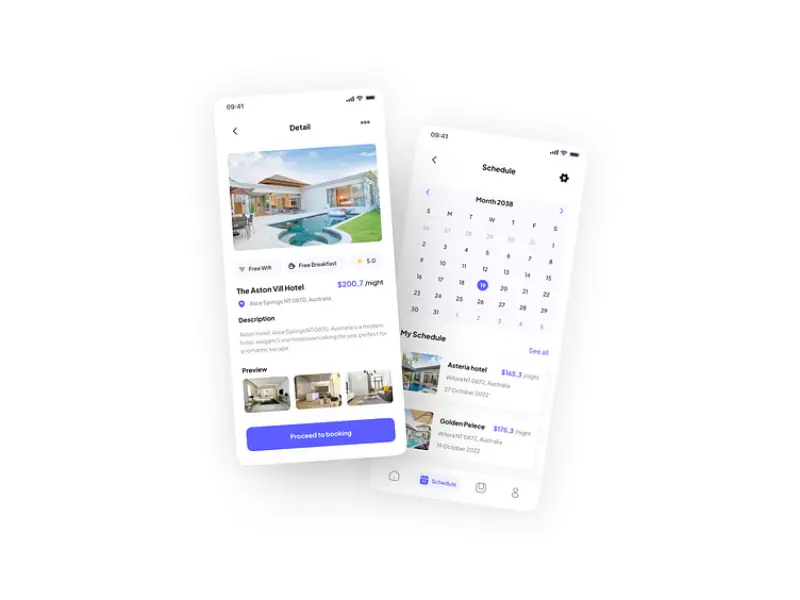
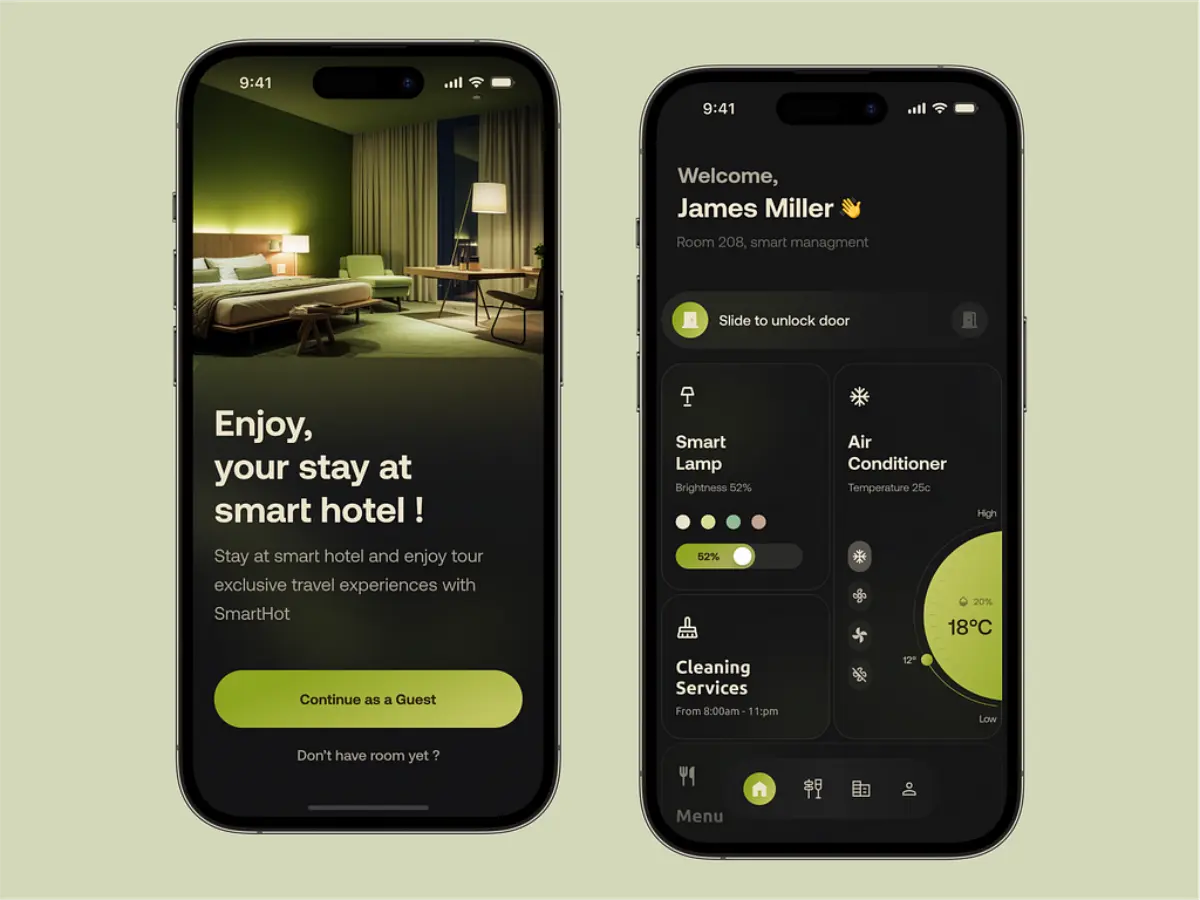
AI in the Hospitality Industry
Want to see more AI in different industries? Check here:
A leading application of AI in the hospitality industry has been through virtual assistants and chatbots. Hotels are increasingly implementing AI-driven chatbots to manage guest inquiries, reservations, and other requests efficiently. These virtual assistants operate 24/7, providing instant responses and minimizing the need for human involvement. With generative AI’s rise, these tools are growing more sophisticated. Marriott International recently introduced RENAI by Renaissance, an AI assistant complementing the Renaissance Navigators program. Currently, in pilot, guests can experience RENAI at The Lindy Renaissance Charleston Hotel, Renaissance Dallas at Plano Legacy West Hotel, and Renaissance Nashville Downtown.
Personalization is crucial for enhancing guest satisfaction, and AI is refining it like never before. By analyzing extensive data, AI creates detailed guest profiles and understands preferences, behaviors, and past interactions. This enables hotels to offer personalized recommendations, such as dining options, local attractions, and tailored promotions. Hilton Hotels utilizes AI to analyze guest preferences and deliver custom experiences, ensuring each stay feels unique and tailored to individual needs.
Collecting and analyzing guest feedback is vital for maintaining high service standards. AI-powered sentiment analysis tools process reviews and social media mentions to gauge guest satisfaction and identify areas for improvement. These tools detect patterns and sentiments from large datasets, providing hotels with actionable insights. For example, Radisson Hotel Group uses ReviewPro, an AI-driven platform, to analyze guest feedback and continuously enhance their services.
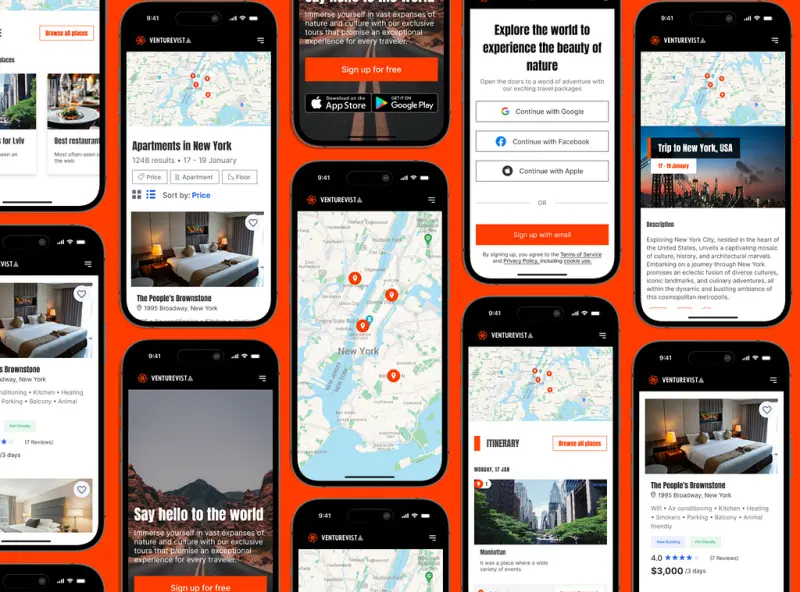
AI in Hospitality Example
Hotel brands are crafting innovative guest experiences with AI, blending technology with creativity. Some hotels are experimenting with AI-driven art installations and interactive displays in lobbies and common areas. These installations respond to guest movements or preferences, creating a dynamic and engaging environment. Additionally, AI-powered virtual and augmented reality experiences offer guests immersive ways to explore local attractions or preview hotel rooms before booking. Jumeirah Hotels & Resorts leverage AI to create virtual reality tours of their properties and use intelligent automation to recommend food and beverages, facilitate guest upgrades, and enhance the online check-in experience.
AI is revolutionizing the travel experience by offering predictive analytics for flight and travel planning. Companies like Kayak and Skyscanner have long used AI algorithms to forecast flight prices, helping travelers secure the best rates. With generative AI, travel planners can now craft personalized itineraries based on individual preferences, ensuring a seamless journey from start to finish.
Several major hotel companies are investing in this area. Choice Hotels International has integrated AI into their mobile app, offering personalized travel recommendations and itineraries. IHG Hotels & Resorts recently announced a generative AI-powered travel planning feature in the IHG One Rewards mobile app. Expedia Group, through EG Labs, has launched Project Explorer, a trip planning tool powered by OpenAI.
Have a Project Idea in Mind?
Get in touch with experts for a free consultation. We’ll help you decide on next steps, explain how the development process is organized, and provide you with a free project estimate.
In marketing, AI is a transformative force. AI-powered tools enable hotels to process extensive data and grasp customer preferences and behavior trends. This approach enables precisely targeted marketing strategies, ensuring promotional efforts reach the right audience at the right time. By leveraging AI, hotels can craft personalized marketing messages, enhancing engagement and conversion rates. Accor Hotels has implemented AI-driven marketing strategies to deliver personalized offers, boosting customer loyalty and satisfaction.
For years, hotel companies have offered online services in multiple languages. To power these digital assets, many hotel companies and their translation service providers use machine translation to handle large volumes of marketing content cost-effectively. GenAI is set to transform content creation, translation, and curation workflows, enabling marketers to create, translate, test, and scale content in minutes and hours instead of days and weeks. Several hotel companies are already piloting these tools.
To maximize the benefits of AI in hospitality industry involves using advanced technologies to streamline operations, enhance guest experiences, and support decision-making. This approach leverages powerful AI models connected to an organization’s unique knowledge base, generating valuable insights for real-time, data-driven decisions.
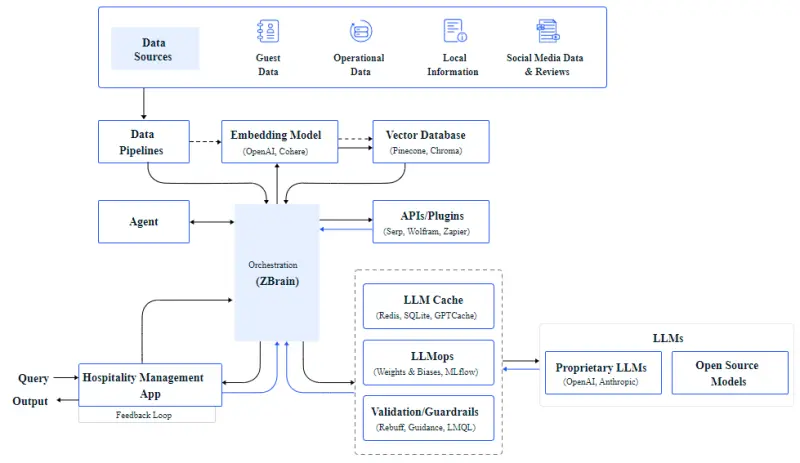
AI in Hospitality Structure
Here’s a breakdown:
Use of AI in Hospitality Industry
This structured flow illustrates how AI in hospitality leverages diverse data sources and technologies to generate actionable insights, automate tasks, improve efficiency, and personalize guest experiences.
Looking forward, AI is poised to transform the hotel industry further. Virtual reality (VR) tours are becoming more common, with hotels using AI and VR to offer immersive property tours, allowing guests to explore before booking. Predictive room service is another possibility, where AI anticipates guest needs based on past behavior, proactively suggesting orders. AI-powered sustainability initiatives can optimize energy and water usage, significantly contributing to environmental efforts.
Enhanced security measures are also on the horizon, with AI improving surveillance by detecting suspicious behavior or unattended items. Additionally, robotic staff may soon handle basic tasks like delivering room service or providing information, adding a novel touch to guest experiences while boosting efficiency.
AI integration in the hotel industry signifies more than a trend; it’s a paradigm shift offering creative solutions that improve operational efficiency and enhance customer experiences. As technology advances, AI’s potential in hospitality is limitless, promising improved efficiency and personalized guest interactions. Hotels embracing AI are leading the way in exceptional service, setting new standards, and shaping the future of guest experiences in the digital age.
AI is revolutionizing the hospitality industry by enhancing efficiency, personalization, and customer satisfaction. As we move forward, the potential for AI to further transform guest experiences is limitless.
If you’re ready to embrace AI in hospitality and elevate your services, contact TECHVIFY for expert development solutions tailored to your needs.
TECHVIFY – Global AI & Software Solution Company
From Startups to Industry Leaders: TECHVIFY prioritizes results, not just deliverables. Accelerate your time to market and see ROI early with high-performing teams, AI (including GenAI) Software Solutions, and ODC (Offshore Development Center) services.