Outstaffing vs Outsourcing: How to Choose the Right Model
Loading...
The TECHVIFY Team is a group of experienced professionals passionate about technology and innovation.
Outstaffing vs outsourcing—which is right for your business? The answer isn’t straightforward. It depends on your goals, resources, and the level of control you want over the development process.
Both models are in high demand as businesses look to scale and grow. In fact, Statista projected IT outsourcing revenue to reach US$395.00 billion in 2022, highlighting the increasing popularity of both outsourcing and outstaffing. These models offer flexibility, enabling companies to access global talent and fill skill gaps.
However, while both provide external expertise, they follow different hiring models and cater to distinct business needs. Understanding these differences is crucial for making the right choice.
In this article, we’ll explain the core differences between outstaffing vs outsourcing, how each model works, and the pros and cons of both. Plus, you’ll learn how to choose the right partner for your business.
IT outsourcing can often feel like a complex decision, but it’s one that can significantly impact your business’s success. While you might have a clear vision of your goals, determining the best way to achieve them can be challenging.
At its core, outsourcing involves bringing your ideas to life by partnering with an external company. Instead of building an in-house IT department from scratch, you collaborate with a vendor who can transform your concept into a functional application or website. In exchange, you pay a predetermined fee for their expertise and services—effectively streamlining the process without the overhead of managing it internally.
Outsourcing vs Outstaffing
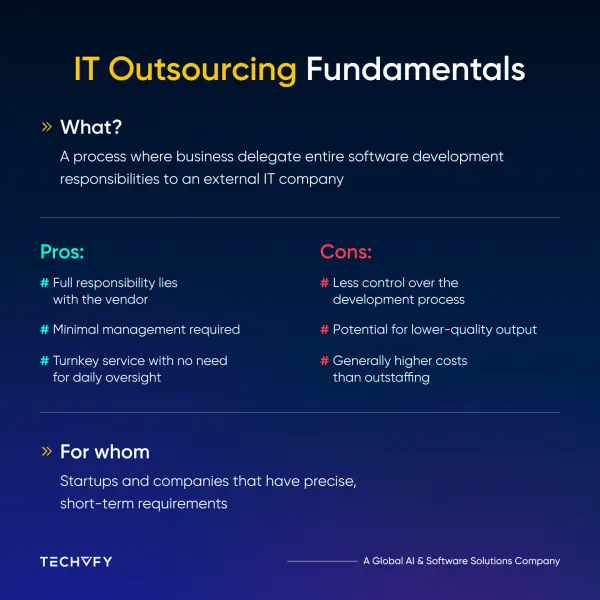
Vendor Responsibility for Code Quality: One of the key benefits of outsourcing is that the vendor takes full accountability for the quality of the code. They handle quality assurance, ensuring that the development aligns with your project’s specifications. This means you won’t need to manage the day-to-day coding process, freeing you up to focus on other areas of your business.
Turnkey Service with No Daily Oversight: Outsourcing offers a hands-off approach. Your vendor manages the entire project workflow, from coordinating resources to overseeing schedules and deliverables. They handle communication and quality control, ensuring everything runs smoothly without requiring constant input from your side.
HR and Staffing Flexibility: Need to scale your project up or down? Your vendor handles all the recruitment, scheduling, and even payroll for the outsourced team. This means you can get the right amount of help exactly when you need it, without the hassle of managing HR-related issues.
No Need for Additional Hardware or Software Purchases: When you outsource, the vendor provides the necessary hardware and software for your project. These costs are typically included in their estimate, so you won’t have to worry about them appearing on your expense ledger.
Access to a Broader Range of Resources: Outsourcing gives you access to a wider pool of specialists who can be brought into your project as needed. Whether you need someone for just a few hours or for a specific task, your vendor can quickly provide the right resource. This flexibility can be a significant advantage over traditional staffing models.
Faster Turnaround Times: With more resources available, often at lower costs, outsourced teams can meet tight deadlines more easily than internal teams. This can be especially valuable during busy periods when your in-house staff might be stretched thin or when you need to avoid overtime costs.
Learn More On:
Less Control Over the Process: While outsourcing relieves you of daily oversight, it also means relinquishing some control. If you prefer to be deeply involved in the planning, coding, and scheduling of your project, outsourcing may feel too hands-off for your liking.
Higher Costs Than Outstaffing: While outsourcing offers convenience and full-service management, these benefits come at a price. Vendors typically charge by the hour, and you’ll also pay for project management services. However, some vendors may offer discounts for long-term partnerships or larger projects.
Reliability Concerns: Choosing the right vendor is crucial. It’s hard to gauge a company’s proficiency until you start working with them. Reviews and testimonials can help, but if the vendor lacks a proven track record, it can be a gamble to trust them with your project.
Limited Direct Contact with the Team: When outsourcing, you won’t always have direct communication with every team member working on your project. This can lead to a disconnect, making it harder to track progress or ensure that the work aligns with your expectations.
Difficulty Monitoring Processes: Without direct oversight, it can be challenging to keep tabs on every aspect of your project. There’s a risk that your contractor may not deliver on promises or could overcharge for services. Maintaining clear communication and setting defined milestones can help mitigate this risk.
Wondering what outstaffing really means? In the world of IT, outstaffing refers to a type of remote employment where an IT specialist is fully dedicated to one client, working exclusively on their projects. Unlike traditional outsourcing, where employees may shift between multiple clients, outstaffing ensures you have a dedicated team member focused on your specific needs, while the IT services provider remains the official employer, handling all the logistics—like payroll, benefits, and taxes.
In essence, outstaffing allows you to “hire” a specialist without the hassle of managing employment contracts, benefits, or HR paperwork. The IT services vendor takes care of those details, so you can focus on your project.
When it comes to payment, there are two main outstaffing models: the “cost model” and the “cost-plus model.”
In the cost model, you pay a flat fee to the vendor, and they handle everything—from salary and benefits to equipment and bonuses. The beauty of this model is simplicity. You know exactly what you’re paying each month without needing to manage any of the details yourself.
The cost-plus model offers a bit more flexibility. You have more control over how your outstaff team members are paid, but this also means you’ll be responsible for covering additional expenses like equipment or overtime. While this gives you more transparency, it can lead to fluctuating costs. In this model, it’s essential to coordinate closely with your HR team and define clear engagement rules to avoid surprises.
Outstaffing Fundamentals
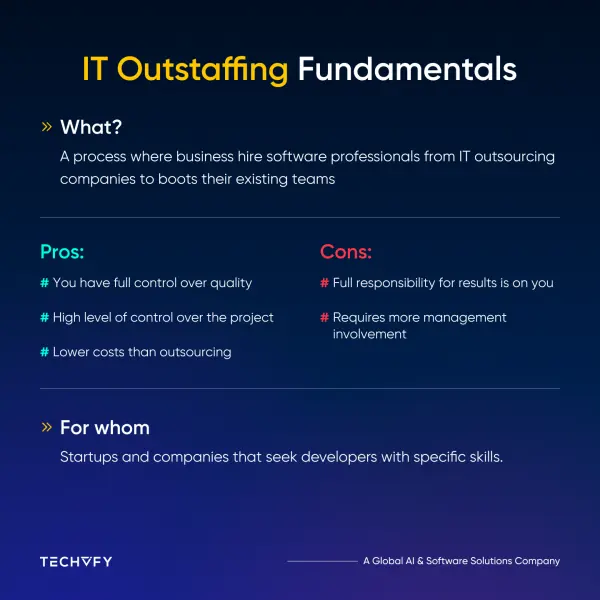
Flexible Hiring Model: Outstaffing gives you the flexibility to scale your team as needed. Whether you need a designer for a month or an additional developer to wrap up a project, outstaffing allows you to quickly add or remove resources. This flexibility makes it easier to meet project demands without the long-term commitments of traditional hiring.
No Legal Hassles: One of the biggest advantages of outstaffing is that you avoid the legal complexities of hiring and firing employees. Since the outstaff team member is officially employed by the vendor, you can easily adjust staffing without worrying about contracts, benefits, or severance.
Daily Control Over Development: Unlike outsourcing, where the vendor manages your project, outstaffing puts you in the driver’s seat. You have direct control over the day-to-day operations, managing the team as if they were your own employees. This allows you to integrate them fully into your development process, ensuring they work closely with your internal team.
Full Access to Resources: Outstaffing offers more hands-on management. You coordinate resources, manage deadlines, and ensure quality control. This level of control is ideal for clients who want to be deeply involved in the development process and maintain oversight of every detail.
Lower Costs: Outstaffing is often a more cost-effective solution compared to outsourcing. Since you’re handling much of the project management yourself, the hourly rates for outstaff team members are typically lower. Plus, by avoiding the overhead costs associated with full-time employees—such as office space, insurance, and bonuses—you can save significantly on overall project expenses.
Fast Turnaround: When you bring an experienced developer onto your team through outstaffing, there’s no need for lengthy onboarding. These specialists already know the ins and outs of their craft, so they can hit the ground running, delivering high-quality work without delays.
Reliability: With outstaffing, you’re working with dedicated professionals who are fully committed to your project. Unlike freelancers, who may juggle multiple clients, your outstaff team is focused solely on your tasks. And because they’re employed by a reputable vendor, there’s more accountability—ensuring you get consistent, high-quality work.
Efficient Hiring Process: Outstaffing companies handle the vetting for you. Instead of sifting through freelancers on platforms like Upwork or Fiverr, you receive resumes from professionals who have already been interviewed and tested. This saves you time and ensures you’re working with skilled, reliable developers.
Guaranteed Technical Expertise: Outstaffing companies prioritize their reputation, which means they only hire top-tier developers. The quality of code from an outstaffing team is often superior to what you might get from less-experienced freelancers. If a problem arises, the outstaffing company risks its reputation, so they’re motivated to provide high-quality service.
Communication Challenges: Since your outstaff team might be working remotely, maintaining clear communication is crucial. You’ll need to integrate them into your project management software and ensure they’re fully transparent with the rest of your team. Setting clear expectations and staying involved in daily operations will help keep everything on track.
Client Responsibility: Unlike outsourcing, where the vendor manages the project, outstaffing places much of the responsibility on you. You’ll need to invest time in managing the team, coordinating resources, and overseeing quality assurance. While this offers more control, you’ll need to decide whether you have the capacity to take on this additional workload.
Higher Costs for Reputable Vendors: If you choose to work with a highly-rated outstaffing company, you may face higher costs. Companies with strong reputations often have more clients and can afford to hire more experienced developers, which can drive up their rates.
Hidden Costs: While outstaffing can be cost-effective, there are potential hidden costs to be aware of:
Looking to Outsource Development?
Contact TECHVIFY, Vietnam’s Leading Offshore Software Development & Outsourcing Company, for a consultation and development services.
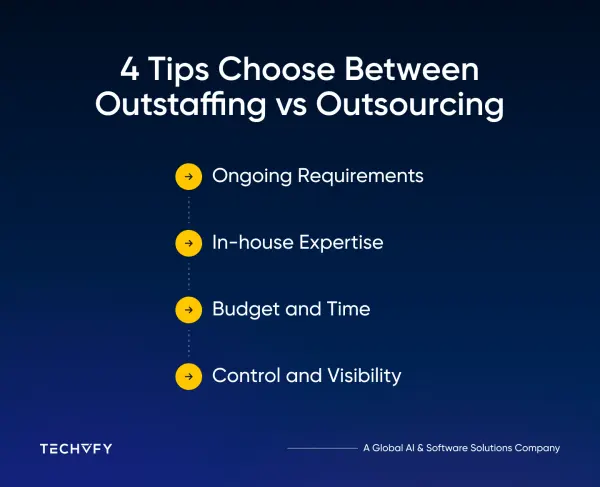
Both outstaffing and outsourcing can be effective solutions, but which one is best for you depends entirely on your business needs. Here’s how you can approach the decision when faced with the outstaffing vs outsourcing dilemma.
Choosing between Outstaffing vs Outsourcing
Start by considering the software problems you’re trying to solve. Do you need long-term support for existing applications? Or are you looking for developers to create an MVP or handle a one-off project? Outstaffing is an excellent choice if your business requires stable, ongoing support. It ensures you have a dedicated team available for the long haul. On the other hand, outsourcing works well for short-term needs, particularly when you have a specific project with a clear beginning and end.
The size and capability of your current IT team play a significant role in your decision. Some companies have a seasoned in-house IT department, while others—like startups—might not. If you lack the technical expertise to manage a development team, outsourcing is likely the better route. It allows startups and non-technical companies to focus on other critical business areas while still bringing their apps to market quickly and efficiently.
However, if you already have a strong in-house team and are simply looking to augment it with specialized skills, outstaffing can be a more efficient option. By integrating skilled outstaffed developers into your existing processes, you can boost your team’s capacity without losing control.
Your budget and timeline are critical factors in this decision. If saving money is a priority and you have an established team ready to manage developers, outstaffing can be a more cost-effective solution. Since you’re managing the team yourself, you avoid paying for additional project management services from the vendor.
However, if you’re under tight deadlines and need a fully managed service, outsourcing might be worth the extra cost. With outsourcing, the vendor takes care of day-to-day management, allowing you to focus on other aspects of your business while ensuring the project stays on track.
For some companies, maintaining control over the development process and ensuring data privacy is paramount. While outsourcing vendors are typically bound by strict NDAs, businesses that prioritize control often prefer to set up an in-house IT team and supplement it with outstaffed developers. This way, your internal team can manage sensitive aspects of the project, while outstaffed developers handle the rest.
However, if technology development isn’t your core business, outsourcing can be a practical and hassle-free solution. It allows you to delegate the technical work to experts, giving you peace of mind and allowing you to focus on what you do best.
Learn More On:
When you choose TECHVIFY, you’re not just outsourcing your project—you’re partnering with a team that delivers world-class talent, scalability, and security, all while ensuring you have access to the best engineering and consultancy services available.
When it comes to choosing between outstaffing and outsourcing, there’s no one-size-fits-all answer. Both models offer unique benefits depending on your business needs, project complexity, and internal resources. Ultimately, the best choice comes down to your specific goals and how you want to manage your development process.
At TECHVIFY, we offer more than just outsourcing services—we provide a partnership that drives your business forward. With access to top-tier talent from Vietnam, seamless scalability, and a strong focus on security and engineering excellence, we’re here to help you bring your ideas to life. Whether you need expert guidance or a dedicated development team, our tailored solutions are designed to meet your unique requirements.
TECHVIFY – Global AI & Software Solution Company
From Startups to Industry Leaders: TECHVIFY prioritizes results, not just deliverables. Accelerate your time to market and see ROI early with high-performing teams, AI (including GenAI) Software Solutions, and ODC (Offshore Development Center) services.