Machine Learning App Development: Strategies for Success
Loading...
The TECHVIFY Team is a group of experienced professionals passionate about technology and innovation.
Machine learning app development is changing the way we use technology. It powers Netflix recommendations, spellcheckers, and voice assistants like Alexa. These systems don’t just follow rules—they learn, improving over time. And the industry is booming. In 2021, machine learning was worth over $15 billion. In a few years, it’s expected to grow past $200 billion. Companies everywhere are using it to build smarter, more user-friendly apps.
Think about voice assistants. They recognize speech, but they also adapt, making responses feel more natural. Wearable devices do something similar. They track heart rate, activity, and sleep, then offer insights to improve health. Machine learning makes apps more intuitive, helping them adjust to each user’s needs. That’s why businesses are racing to add it, making technology feel smoother and more personal.
So how does it work? In this article, we’ll break it down step by step. You’ll learn the basics, explore key concepts, and even see how to do machine learning app development. Whether you’re a beginner or just curious, this guide will help you understand the power behind this game-changing technology.
Machine learning in app development is a type of artificial intelligence that helps computers learn from data without needing direct programming. Instead of following strict rules, ML systems find patterns, make predictions, and improve over time. Once trained, they can recognize new data and make decisions based on past experiences.
When an ML system analyzes fresh information, it uses patterns from previous data to predict outcomes. The more data it has, the more accurate its predictions become. This is why high-quality data is so important—it helps the system refine its understanding and perform better in real-world situations.
 Machine learning app development
Every machine learning system has a few essential parts that help it function:
| Component | What It Does |
|---|---|
| Data | The information the system learns from. The more diverse and accurate the data, the better the results. |
| Model | A trained system that finds patterns and makes predictions. It connects inputs (data) to outputs (results). |
| Algorithm | The process that helps the model learn. It adjusts based on data to improve accuracy over time. |
There are three main types of machine learning, each with its own approach and purpose.
Supervised learning trains models using labeled data, meaning each input has a known answer. This method is great for tasks like sorting emails (spam vs. not spam) or predicting prices (house values based on past sales). For example, a health app might use supervised learning to predict heart disease risk by analyzing patient data. The more labeled examples it has, the better it gets at making accurate predictions.
Unsupervised learning works with unlabeled data, meaning the system has to find patterns on its own. It’s useful for tasks like grouping similar customers (to offer personalized recommendations) or simplifying complex data. An e-commerce app might use unsupervised learning to discover shopping trends without predefined categories. Since there’s no clear right or wrong answer, results often require deeper analysis.
Reinforcement learning is all about trial and error. The system interacts with an environment, makes choices, and gets feedback in the form of rewards or penalties. Over time, it learns the best actions to take. This is commonly used in robotics, self-driving cars, and even video games—where AI needs to adapt to changing situations. The challenge is designing a reward system that encourages the right behavior.
Learn More On:
Developing a machine learning application development project is similar to regular software development but comes with unique challenges. ML requires large datasets, specialized algorithms, and ongoing model improvements.
Here’s how to build an ML-powered app from the ground up.
Not every problem requires machine learning. Sometimes, a simple rule-based system works just fine.
For example, if you’re adding a registration form that checks email formats, password strength, and required fields, traditional validation rules are enough. Using ML for this would add unnecessary complexity without much benefit.
Before investing in ML app development, ask yourself:
If ML is the best solution, move on to the next step.
Machine learning models learn from data, so high-quality data is essential. More data generally leads to better accuracy.

ML app development
You can gather data from internal databases, public datasets, or user-generated inputs. However, raw data is often messy and needs cleaning before use. This process includes:
Clean, well-structured data helps the ML system learn effectively and make accurate predictions.
The right algorithm depends on your app’s purpose and the type of data you have.
For example:
| Algorithm | Best For | How It Works |
|---|---|---|
| Linear Regression | Predicting prices | Estimates continuous values based on input trends. |
| Logistic Regression | Spam detection | Sorts data into one of two categories (e.g., spam/not spam). |
| Decision Tree | Customer segmentation | Uses a branching structure to predict outcomes. |
| Support Vector Machines (SVM) | Image recognition | Finds the best way to separate data into different groups. |
| Random Forest | Fraud detection | Combines multiple decision trees to improve accuracy. |
| Neural Networks | Speech recognition | Learns patterns and relationships in complex data. |
| Clustering | Market segmentation | Groups similar data points together. |
| Principal Component Analysis (PCA) | Image compression | Reduces data complexity while keeping essential details. |
| Association Rule Learning | Shopping recommendations | Finds relationships between different data points. |
Your tech stack should match your project’s needs and your team’s expertise. Python is the most widely used language for ML, but other options like R and JavaScript may be better in certain cases.
Key Considerations for Choosing a Tech Stack
Additionally, ensure your tech stack can handle your dataset size. Large datasets require powerful frameworks to process and manage data efficiently.
| Category | Technologies |
|---|---|
| Programming Languages | Python, R, Java/Scala, C++, Go, SQL |
| Frameworks | TensorFlow, Caffe2, SciKit, PyTorch, MXNet, Keras |
| Data Warehousing | Hadoop, BigQuery, Snowflake, Spark, Ray, Redshift |
| Libraries | Pandas, Keras, SciPy, NumPy, DaskML, NLTK |
| Cloud Services | AWS SageMaker, IBM Watson, AWS Glue, Google Cloud AI, Azure ML Studio, Azure DataBricks |
| DevOps Tools | CometML, HopsWorks, Apache Maven, Kubeflow, MLFlow, Docker |
| Development Tools | Jupyter Notebooks, Google Data Lab, SQLAlchemy, Google Colab, Airflow, Hevo |
In machine learning app development, you have two main options when creating an ML model: using a pre-trained model or building a custom model from scratch.
A pre-trained model is already trained on a large dataset and can be fine-tuned for your specific needs. These models are great for common tasks like image recognition, language translation, and text analysis.
Advantages: Faster implementation, lower costs, and requires less data.
Disadvantages: Limited flexibility and may not perform well for highly specific tasks.
A custom model is trained from scratch using your own dataset. This approach is ideal for unique business needs that require high accuracy.
Advantages: More precise, adaptable to industry-specific data, and can be updated with new information.
Disadvantages: Requires more time, resources, and expertise.
| Learning Type | How It Works | Example Use Case |
|---|---|---|
| Supervised Learning | Uses labeled data to teach the model. It learns from correct answers and improves over time. | Image classification (e.g., identifying cats vs. dogs). |
| Unsupervised Learning | Finds patterns in unlabeled data. The model groups similar data points but requires human interpretation. | Customer segmentation (e.g., identifying shopping trends). |
| Reinforcement Learning | The model learns by making decisions, receiving rewards for correct actions and penalties for mistakes. | Self-driving cars (e.g., learning to navigate roads safely). |
Once trained, an ML model must be integrated into an application as part of the machine learning app development process. Deployment can be cloud-based or on-premises.
Cloud services like AWS, Google Cloud, and Azure offer scalable and flexible hosting for ML models. The model is uploaded and accessed via APIs.
Pros: Easy to scale, minimal maintenance.
Cons: Requires internet access, ongoing costs.
Models run on local servers, offering better security for sensitive data but requiring dedicated infrastructure.
Pros: Greater data control.
Cons: Higher maintenance and setup costs.
Have a Project Idea in Mind?
Get in touch with experts for a free consultation. We’ll help you decide on next steps, explain how the development process is organized, and provide you with a free project estimate.
Real-world data changes over time, which can reduce model accuracy. Regular monitoring ensures optimal performance.
The model is updated only when performance drops or data shifts significantly.
Pros: Efficient resource use.
Cons: Slower adaptation to sudden changes.
The model is automatically updated with new data in real-time.
Pros: Adapts quickly to trends.
Cons: Higher computational costs.
Machine learning app development helps businesses create smarter, more efficient, and user-friendly apps. Here’s how it can improve your mobile application:
ML analyzes user data to offer personalized recommendations. It studies social media activity, past purchases, and browsing history to understand:
This helps businesses offer content and products that match user interests.
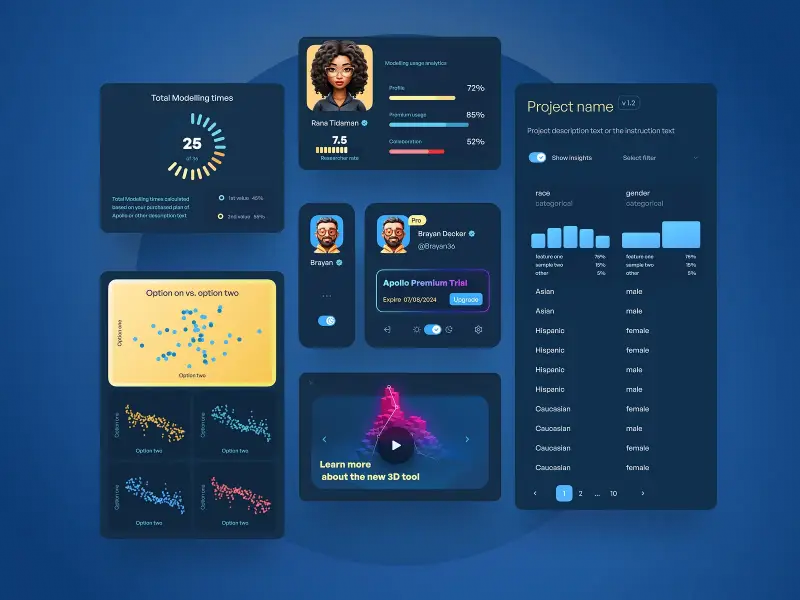
Machine learning in app development
ML improves search functions by learning from user behavior. It remembers past searches, browsing patterns, and preferences to show the most relevant results. This makes searching faster and more accurate.
ML helps businesses understand customer habits. It looks at factors like age, location, and app usage to predict what users might need next. This makes marketing and user experiences more effective.
Instead of showing random ads, ML helps display only relevant ones. It studies what users like and customizes ads to match their interests. This increases engagement and reduces annoying, irrelevant ads.
ML improves app security with features like biometric authentication (face and fingerprint recognition). It also detects and blocks suspicious activity, protecting user data from fraud and cyber threats.
Many leading mobile apps leverage machine learning in app development to enhance user experiences, personalize content, and improve engagement. Here are some notable examples of how ML is transforming mobile applications:
Snapchat employs supervised machine learning algorithms, particularly in computer vision. The app’s ML models detect faces in photos and add playful elements such as glasses, hats, and dog ears. This technology enables real-time augmented reality (AR) filters, making interactions more engaging for users.

Machine learning application development
Tinder uses a reinforcement learning algorithm to optimize its Smart Photos feature. The algorithm randomly displays a user’s photos to others and tracks the number of right and left swipes each photo receives. Over time, it determines which photos are the most attractive and reorganizes the user’s profile to showcase the most popular ones first, increasing match potential.
Spotify uses three machine learning techniques to provide personalized music recommendations in its Discover Weekly section:
Yelp utilizes supervised machine learning to curate its Recommended for You collections. ML algorithms analyze restaurant reviews, identifying frequently mentioned dishes to highlight popular menu items. Additionally, Yelp applies machine learning to classify and label user-submitted food photos, achieving an impressive 83% accuracy rate in recognizing dish attributes.
Facebook integrates machine learning across various features. The People You May Know section uses ML algorithms to suggest potential new friends by analyzing user profiles, interests, mutual friends, and social connections. Facebook also applies machine learning for content moderation, detecting misinformation, and improving ad recommendations.
eBay employs reinforcement learning for its product recommendation chatbot, ShopBot. This intelligent assistant interprets user preferences by processing text messages and images to identify the most relevant product matches. By learning from user interactions, ShopBot enhances search accuracy and helps users find the best deals.
Learn More On:
Developing a machine learning application development project comes with several challenges. Here are some of the biggest obstacles businesses face:
Machine learning application development is transforming how businesses engage with users, optimize operations, and enhance security. From personalization and predictive analytics to advanced search and fraud detection, ML-powered apps offer a competitive edge. However, challenges like data quality, computational limitations, and integration complexities require expert solutions.
At TECHVIFY, we specialize in building intelligent, efficient, and scalable ML applications tailored to your business needs. Our experienced AI & ML engineers handle everything—from data collection to seamless integration—so you can focus on growth. Contact TECHVIFY today for a free consultation and let’s turn your vision into a powerful, AI-driven application.
TECHVIFY – Global AI & Software Solution Company
From Startups to Industry Leaders: TECHVIFY prioritizes results, not just deliverables. Accelerate your time to market and see ROI early with high-performing teams, AI (including GenAI) Software Solutions, and ODC (Offshore Development Center) services.