DataOps vs DevOps: Which One Does Your Business Need?
Author
The TECHVIFY Team is a group of experienced professionals passionate about technology and innovation.
In the current competitive business environment, understanding the difference between DataOps and DevOps is crucial for adopting swift, dependable, and efficient practices and methodologies to gain a competitive advantage.
This is where the methodologies of DataOps and DevOps come into play, offering enhancements to your organization’s data pipelines and software development processes to solidify your position in the market.
The DevOps methodology has revolutionized software development, and now data teams recognize the advantages of applying a similar strategy to their operations.
But what is DataOps vs DevOps? Understanding this distinction is key to how your organization should choose between the two. Explore this guide to understand the difference between DataOps and DevOps, helping your organization make an informed decision.
I. DataOps vs DevOps: Overview
1. What is DataOps?
Data Operations, commonly known as DataOps, is an agile, process-oriented methodology aimed at improving data analytics’ speed, accuracy, and quality. It borrows from DevOps, Lean Manufacturing, and Agile development principles, focusing on streamlining the data lifecycle from data preparation to reporting. DataOps emphasizes collaboration between data scientists, analysts, data engineers, and business stakeholders to foster a culture of continuous improvement, integration, and automation of data flows across an organization.
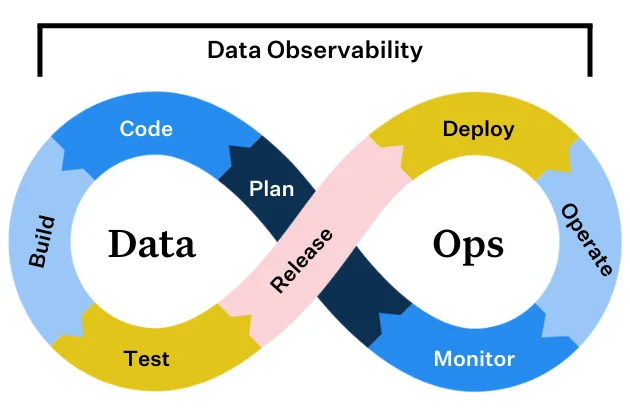
Benefits of DataOps
- Improved Data Quality and Accuracy: Automates data validation and testing to ensure reliability and reduce errors.
- Increased Agility: Adapts quickly to changes, keeping data analytics aligned with fast-moving business demands.
- Enhanced Collaboration: Fosters cross-team communication, aligning data projects with business goals.
- Faster Time to Insight: Accelerates insight derivation through continuous data analytics delivery.
- Scalability and Efficiency: Enables efficient management and scaling of data analytics capabilities without sacrificing quality.
2. What is DevOps?
DevOps integrates software development (Dev) and IT operations (Ops) into a cohesive set of practices designed to accelerate the systems development life cycle while ensuring continuous delivery of high-quality software. It emphasizes automation, collaboration between product management, software development, and operations teams, and the alignment toward common business objectives.
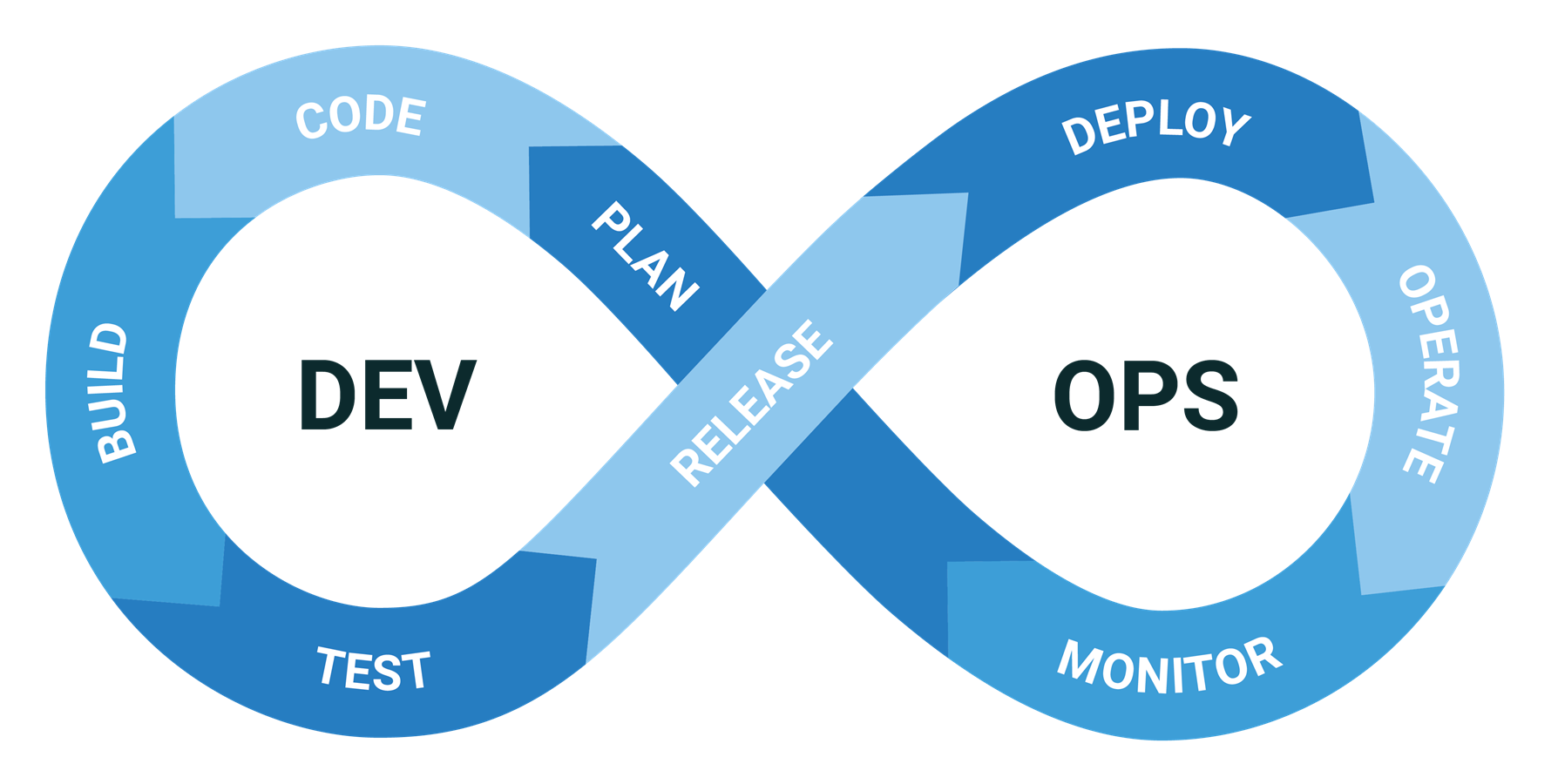
Benefits of DevOps
- Enhanced Collaboration and Communication: Removes barriers between teams, creating a culture of openness and joint responsibility.
- Increased Efficiency through Automation: Automates repetitive tasks, speeding up software delivery and reducing errors.
- Improved Reliability: Ensures the stability and reliability of applications through continuous integration and delivery.
- Faster Time to Market: Accelerates the release cycle, helping businesses respond more quickly to market changes and customer feedback.
- Better Product Quality: Integrates quality assurance and security practices throughout the development lifecycle, improving product quality.
II. The Differentiation Between DataOps vs DevOps
Let’s find out what is the difference between DevOps and DataOps
| Feature | DataOps | DevOps |
|---|---|---|
| Primary Focus | Enhancing data analytics and management through automation and integration. | Streamlining and improving the software development and deployment process. |
| Key Objectives | Improve data quality, accelerate time to insight, and foster collaboration across data teams. | Boost the frequency of deployments, accelerate market entry, and improve the quality of software. |
| Main Stakeholders | Data engineers, data scientists, analysts, and business users. | Software developers, IT operations teams, and quality assurance professionals. |
| Core Practices | Agile methodology, automation of data flows, continuous data integration and delivery. | Continuous integration (CI), continuous delivery (CD), and automated testing. |
| Tools and Technologies | Data integration tools, data quality tools, analytics platforms. | Version control systems, CI/CD pipelines, and configuration management tools. |
| Benefits |
|
|
| Challenges | Managing diverse data sources and formats, ensuring data privacy and security. | Balancing speed and security, managing complex environments, and ensuring reliability. |
| Outcome | Data-driven decision making, agile response to data insights. | Rapid, reliable software delivery, and improved operational efficiency. |
More articles about DevOps you might want to read:
III. Case Studies and Examples of DataOps vs DevOps in Practice
Below are examples of how various organizations have put DataOps and DevOps into practice:
1. Uber: Transportation Data Management with DataOps and DevOps
DataOps Role:
- Data Management and Analytics: Uber generates and processes massive amounts of data related to rides, traffic, and user behavior. DataOps practices help in organizing this data efficiently, ensuring it’s accurate, accessible, and secure. This involves automating data pipelines, monitoring data quality, and facilitating seamless data sharing among teams.
- Real-time Data Processing: For a real-time service like Uber, timely data processing is crucial. DataOps enables the real-time analysis of data for dynamic pricing, route optimization, and demand forecasting, enhancing operational efficiency and customer satisfaction.
DevOps Role:
- Automation: Automating the software development lifecycle, including testing, integration, and deployment processes, allows Uber to rapidly roll out new features and fixes, reducing downtime and improving user experience.
- Continuous Integration and Delivery (CI/CD): DevOps practices enable Uber to continuously integrate code changes into a central repository and deliver updates to users swiftly and reliably, ensuring the app remains competitive and responsive to user needs.
2. Capital One: Financial Data Handling with DataOps and DevOps
DataOps Role:
- Risk Management and Fraud Detection: Capital One leverages DataOps to enhance its ability to analyze financial transactions in real-time, identifying patterns indicative of fraudulent activity and managing risk more effectively.
- Data Governance and Compliance: In the financial industry, regulatory compliance is paramount. DataOps practices help Capital One ensure that data handling and processing meet strict regulatory standards, protecting customer information and maintaining trust.
DevOps Role:
- Enhanced Software Workflow: By adopting DevOps practices, Capital One has streamlined its software development and deployment processes, enabling faster and more efficient updates to its banking applications and services.
- Infrastructure as Code (IaC): DevOps allows Capital One to manage its infrastructure through code, improving provisioning, scalability, and consistency across environments, which is crucial for handling financial data and applications securely and efficiently.
3. Netflix: Streaming Service Enhancement with DataOps and DevOps
DataOps Role:
- Content Recommendation and Personalization: DataOps enables Netflix to manage and analyze vast datasets on customer viewing habits and preferences efficiently, driving the algorithms that power its highly personalized content recommendations.
- Data Scalability and Elasticity: As Netflix’s user base grows, DataOps practices ensure that data infrastructure scales dynamically to handle increased loads, maintaining high performance and reliability of the streaming service.
DevOps Role:
- Continuous Deployment: Netflix’s use of DevOps practices, particularly around continuous deployment, allows it to update its platform frequently with minimal disruption to service, ensuring a seamless viewing experience for its global audience.
- Microservices Architecture: DevOps supports Netflix’s microservices architecture, enabling independent development, testing, and deployment of service components. This approach enhances the agility and resilience of Netflix’s streaming service, allowing rapid iteration and innovation.
IV. Which One Should You Go For? DevOps vs DataOps
Choosing between DataOps and DevOps hinges on your organization’s specific needs, goals, and the nature of the challenges you face. Here’s a straightforward approach to making that choice:
Identify Your Primary Focus
If your main challenge lies in managing and analyzing data efficiently to drive decision-making, DataOps is likely the better choice. It’s tailored for organizations that aim to improve the quality, accessibility, and insightfulness of their data. On the other hand, DevOps is the way to go if your focus is on streamlining software development processes, reducing deployment times, and enhancing collaboration between development and operations teams.
Assess Your Current Pain Points
Consider where your bottlenecks or inefficiencies lie. Are they in the realm of data management and analytics? Or do they pertain to the software development lifecycle and deployment processes? Identifying these pain points can guide you toward the methodology that addresses your specific issues more directly.
Consider Your Organizational Goals
What are your short-term and long-term objectives? For companies looking to leverage big data and analytics for strategic decisions, DataOps provides a framework to capitalize on data assets. Conversely, if your goal is to accelerate product development and improve operational efficiency in software delivery, DevOps offers the principles and practices to achieve these objectives.
Evaluate Your Team’s Skills and Resources
Implementing either DataOps or DevOps requires specific skill sets and resources. DataOps demands expertise in data engineering, analytics, and possibly machine learning, along with the right tools for data integration, quality control, and automation. DevOps, meanwhile, requires skills in software development, IT operations, and familiarity with CI/CD tools, automation platforms, and cloud services. Assess whether your team has the skills and tools necessary for a successful implementation or if you need to invest in training and technology.
Look at Industry Trends and Competitor Strategies
Sometimes, the choice between DataOps and DevOps can be influenced by trends in your industry, or the strategies adopted by competitors. If industry leaders are gaining a competitive edge through rapid software innovation (DevOps) or leveraging data analytics (DataOps), a similar focus might be worth considering.
Conclusion
DevOps and DataOps each play a crucial role in modernizing business practices through improved collaboration, efficiency, and quality in software development and data management. While DevOps accelerates software delivery, DataOps enhances data analytics, each addressing distinct but equally important aspects of digital transformation.
Looking to harness the power of DevOps or DataOps? TECHVIFY offers expert services to elevate your software development and data management strategies. Contact TECHVIFY now and take the first step towards operational excellence and data-driven decision-making.
TECHVIFY – Global AI & Software Solution Company
From Startups to Industry Leaders: TECHVIFY prioritizes results, not just deliverables. Accelerate your time to market and see ROI early with high-performing teams, AI (including GenAI) Software Solutions, and ODC (Offshore Development Center) services.
- Email:[email protected]
- Phone:(+84)24.77762.666
FAQs

What is DevOps, and how does it differ from DataOps?
DevOps integrates software development and IT operations to speed up delivery and improve software quality. DataOps applies similar principles to data analytics, focusing on improving data quality and collaboration. The main difference lies in their focus: DevOps on software processes, and DataOps on data management.
Which Is Better: DataOps or DevOps?
DataOps is ideal for optimizing data analytics and management, whereas DevOps excels in streamlining software development and deployment. The choice depends on an organization’s specific focus and needs.