A Practical Guide to Minimum Viable Product in Agile for 2025
Loading...
The TECHVIFY Team is a group of experienced professionals passionate about technology and innovation.
The Minimum Viable Product (MVP) lies at the heart of Agile development, completely transforming how products are envisioned, built, and brought to market. In a landscape where consumer expectations keep evolving and market trends shift rapidly, mastering the MVP has become essential for businesses aiming to launch successful products that truly meet user needs.
Research shows that around 90% of startups fail or run out of money within their first year. A thoughtfully designed MVP can prevent many of these failures by helping companies focus on delivering core value early, rather than spreading resources thin across unnecessary features.
In this article, we’ll explore what MVP really means, how it fits into the Agile framework, why some organizations might hesitate to embrace it, and how leveraging a Minimum Viable Product in Agile can drive product success and business growth.
The MVP Agile definition can be started by explaining Agile is a dynamic development framework, commonly used in software projects, that emphasizes delivering working software in short, iterative cycles. These cycles, typically called “sprints” or “iterations,” last between 1-3 weeks and promote continuous improvement. Agile fosters close collaboration between development teams and stakeholders, ensuring everyone is aligned on progress and can quickly respond to shifting requirements.
This approach is particularly effective in product development, where the end goals are often fluid, and new insights emerge throughout the process.
MVP in Agile
Within Agile, the Minimum Viable Product (MVP) plays a critical role. An MVP is the earliest version of a product that includes only the essential features needed to test the product’s vision and gather user feedback. The key here is the word “minimum.” The MVP isn’t meant to be a fully polished, feature-complete product. Instead, it serves as a tool to validate whether the development is on the right track, based on real-world user feedback.
By focusing on the core functionality, teams can quickly determine if their product resonates with users and adjust their roadmap accordingly saving time, effort, and resources.
Learn More On:
Creating a Minimum Viable Product in Agile framework is an exciting and strategic process. From defining the core problem to testing your solution, each step brings you closer to launching a product that truly resonates with users. Let’s walk through the key stages of building a Minimum Viable Product in Agile and explore how you can turn an initial idea into a validated market solution.
The journey of building a Minimum Viable Product in Agile starts by clearly defining the problem you’re aiming to solve. This is the foundation of your Agile development process. To uncover the true pain points of your target users, consider the following steps:
A great way to ensure focus is by applying the OKR (Objectives and Key Results) methodology, a popular goal-setting framework. It helps align teams around measurable, ambitious goals:
Defining the problem with clarity and precision sets the stage for a successful MVP. It’s not just about having a great idea; it’s about ensuring that idea is both relevant and viable.
Before diving into development, you need to understand the competitive landscape. Are there already solutions addressing the same problem? And if so, how can your MVP stand out?
Understanding your competitors gives you a competitive edge. It allows you to refine your product idea and ensure it meets market demand in a more compelling way than existing alternatives. In short, great preparation leads to better outcomes.
Once you’ve defined the problem and researched the competition, it’s time to identify the essential features your MVP needs to address user pain points. The key here is to keep things simple and focused on delivering core value.
Here’s how to identify the right features for your Agile MVP:
Remember, your MVP should solve at least one real problem for your customers. Avoid overcomplicating the solution—focus on simplicity and smooth functionality. Once you’ve identified the core features, it’s time to create a product roadmap, define user stories, and map out the user flows. This ensures that your MVP remains aligned with both user needs and development goals.
Minimum Viable Product in Agile
Now comes the iterative development phase, where the Build-Measure-Learn process takes center stage. Using Agile principles, your team will break the development process into sprints—short, focused cycles that deliver tangible results.
In each sprint, you’ll:
This iterative approach allows for constant adjustments based on real-world feedback, ensuring that your MVP evolves in line with user expectations. Collaboration is key here: close communication between teams, stakeholders, and customers enables quick pivots and improvements along the way.
At some point during development, your MVP will provide enough data to make a critical decision: should you continue building the product as planned, pivot to a new direction, or abandon the idea altogether?
Remember, building an MVP isn’t just about coding—it’s about searching for validation. The goal is to create something that users will love and find valuable. If the feedback shows you’re on the right track, keep building! If not, don’t be afraid to make changes or rethink your approach.
In the end, Agile MVP development is a process of learning, adapting, and growing. Every step brings you closer to creating a product that not only solves real problems but also delivers meaningful value to your users.
Have a Project Idea in Mind?
Get in touch with experts for a free consultation. We’ll help you decide on next steps, explain how the development process is organized, and provide you with a free project estimate.
Combining the lean approach of a Minimum Viable Product (MVP) with the iterative power of Agile creates a strategic tool that empowers development teams to make well-informed decisions throughout the product lifecycle. By blending Agile’s flexibility with the focused experimentation of an MVP, businesses can unlock a wide range of benefits that set the stage for long-term success.
When it comes to developing an MVP, the Agile development model stands out as one of the most effective approaches. At Upsilon, we’ve been using Agile to build MVP products for over five years, and through that experience, we’ve identified some key best practices that can accelerate your development process and help deliver meaningful results. Let’s take a closer look at the most important Agile practices that can be applied to MVP development.
MVP in Agile best practices
At the core of Agile lies iterative development, which breaks the process down into manageable sprints. Think of it like hiking up Mount Kilimanjaro. The journey is new, and conditions can change rapidly, so flexibility is key. Along the way, you’ll make stops to assess your surroundings and adjust your plan based on real-time conditions. It would be reckless to push forward without pausing to evaluate—ignoring the weather, terrain, or other variables. The same principle applies to software development.
In Agile, you work in small, iterative cycles, each ending with a visible result—typically a working version of the product. This approach allows for continuous testing and user feedback at every step. Each iteration builds upon the last, ensuring that your product is evolving and improving over time. This contrasts with traditional methods, where teams often spend too much time developing a large-scale product all at once, only to discover gaps or issues too late in the process.
Just as you wouldn’t climb Kilimanjaro alone, you can’t build a successful product in isolation. Agile emphasizes teamwork and collaboration. Every team member works together, fully engaged in the process, to create the best possible product. This collaborative effort ensures that if a pivot or plan change is needed, the team can respond quickly and efficiently.
In Agile, communication is constant and ongoing. Daily standups and regular check-ins ensure that everyone is aligned and up-to-date on the project’s progress. Agile thrives on adaptability, and given how quickly requirements can change, teams must be ready to make decisions and adjust priorities on the fly.
Equally important is customer feedback. Agile development values real-world insights over assumptions. By incorporating user feedback continuously, teams can prioritize features more effectively and refine their roadmap based on data rather than guesses. Without this adaptability, decisions would be based on potentially flawed hypotheses, leading to greater risk and uncertainty.
While Agile values teamwork, it also empowers individual responsibility. Unlike traditional models that rely heavily on top-down management, Agile teams are self-sufficient. Each team member takes ownership of their tasks, working toward the common goal of product release. This autonomy helps teams avoid bottlenecks and delays, ensuring smoother progress and faster delivery.
There are several other foundational principles that make Agile stand out. For instance, Agile prioritizes functioning products over flawless documentation. Since time is critical and changes are frequent, the focus remains on delivering a stable, working solution at the end of each sprint. After each sprint, the team assesses the product’s progress and makes necessary adjustments to the roadmap, ensuring that the product evolves in line with real-world needs.
Another key aspect of Agile is its adaptability. Agile is built around the idea of responding to change—whether it’s shifting customer needs, market trends, or unforeseen challenges. This flexibility makes Agile a perfect fit for MVP development, where the goal is to test core assumptions and quickly pivot based on early feedback.
Learn More On:
While Minimum Viable Product in Agile is a popular and effective strategy, you may have also come across terms like Minimum Lovable Product (MLP) and Minimum Marketable Product (MMP). Understanding the differences between these approaches can help you tailor your product launch strategy to better align with your goals. Let’s break down what sets these methods apart.
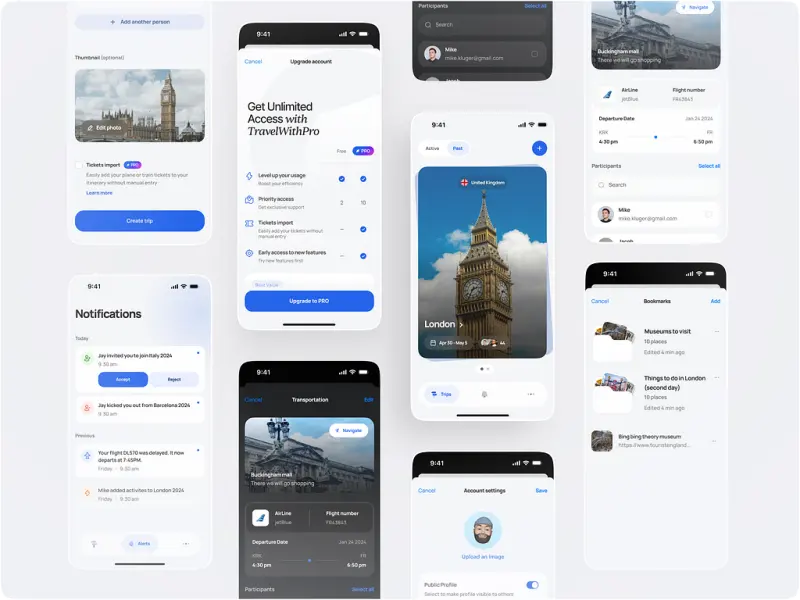
MVP Agile example
The MVP focuses on validating your core product concept with real users. It includes only the most essential features needed to solve a specific problem and emphasizes functionality above all else. The primary goal of an MVP is to gather feedback from users to determine whether the product resonates with them. Essentially, it’s about testing whether your idea has a market before investing further time and resources.
The MLP goes a step beyond basic functionality. While an MVP seeks validation, an MLP aims to create an emotional connection with users—something they can fall in love with. By prioritizing user experience (UX) and delightful design, the MLP seeks to generate positive sentiment and foster brand loyalty from the first interaction. It’s not just about solving a problem; it’s about leaving a lasting impression that drives engagement and enthusiasm for the product.
The MMP, on the other hand, is geared toward achieving product-market fit and generating revenue. Its focus is on delivering a product that has enough features and value to attract paying customers. An MMP includes the essential functionalities and features needed to satisfy core user personas, positioning the product for monetization and helping the business start generating income.
Each of these approaches—MVP, MLP, and MMP—has its place in product development, and the choice depends entirely on your business strategy and what you want to achieve with your product launch.
There’s also nothing stopping you from combining elements of each approach to create something truly unique and desirable. For example, you could start with an MVP to validate your idea, then evolve it into an MLP to drive user engagement and ultimately refine it into an MMP to achieve product-market fit and start generating revenue.
In a fast-changing market, where customer needs are constantly evolving, an MVP allows you to test your idea early, gather valuable feedback, and make informed decisions—helping you avoid unnecessary resource waste and reducing the risk of failure.
By focusing on the essentials and iterating based on real user input, businesses can deliver products that truly resonate with their audience. Whether you’re looking to validate a new concept, enhance user engagement, or achieve product-market fit, the MVP approach provides a solid foundation for long-term success.
At TECHVIFY, we specialize in guiding businesses through the MVP process with Agile development expertise. Our team helps you quickly validate your ideas, optimize development costs, and bring your product to market faster.
Contact us today for a free consultation and see how we can help you turn your vision into a reality. Let’s work together to create a product that meets your business goals and exceeds user expectations.
TECHVIFY – Global AI & Software Solution Company
From Startups to Industry Leaders: TECHVIFY prioritizes results, not just deliverables. Accelerate your time to market and see ROI early with high-performing teams, AI (including GenAI) Software Solutions, and ODC (Offshore Development Center) services.