Chatbots for Business: Real-world Examples, Benefits, and Best Practices
Loading...
The TECHVIFY Team is a group of experienced professionals passionate about technology and innovation.
Juniper Research forecasts that the global chatbot market will reach $13.8 billion by 2025. Many factors drive this growth, including the increasing adoption of artificial intelligence (AI) and machine learning (ML) technologies, the growing demand for 24/7 customer service, and the need for businesses to reduce costs. This article introduces chatbots, including their definition, business use cases, and benefits. It will also discuss best practices for using chatbots for business and answer frequently asked questions.
A chatbot is a computer program that mimics human speech. Chatbots often feature in customer service applications, where they can answer questions and support customers. In addition to these uses, chatbots can be helpful for research, entertainment, and teaching.
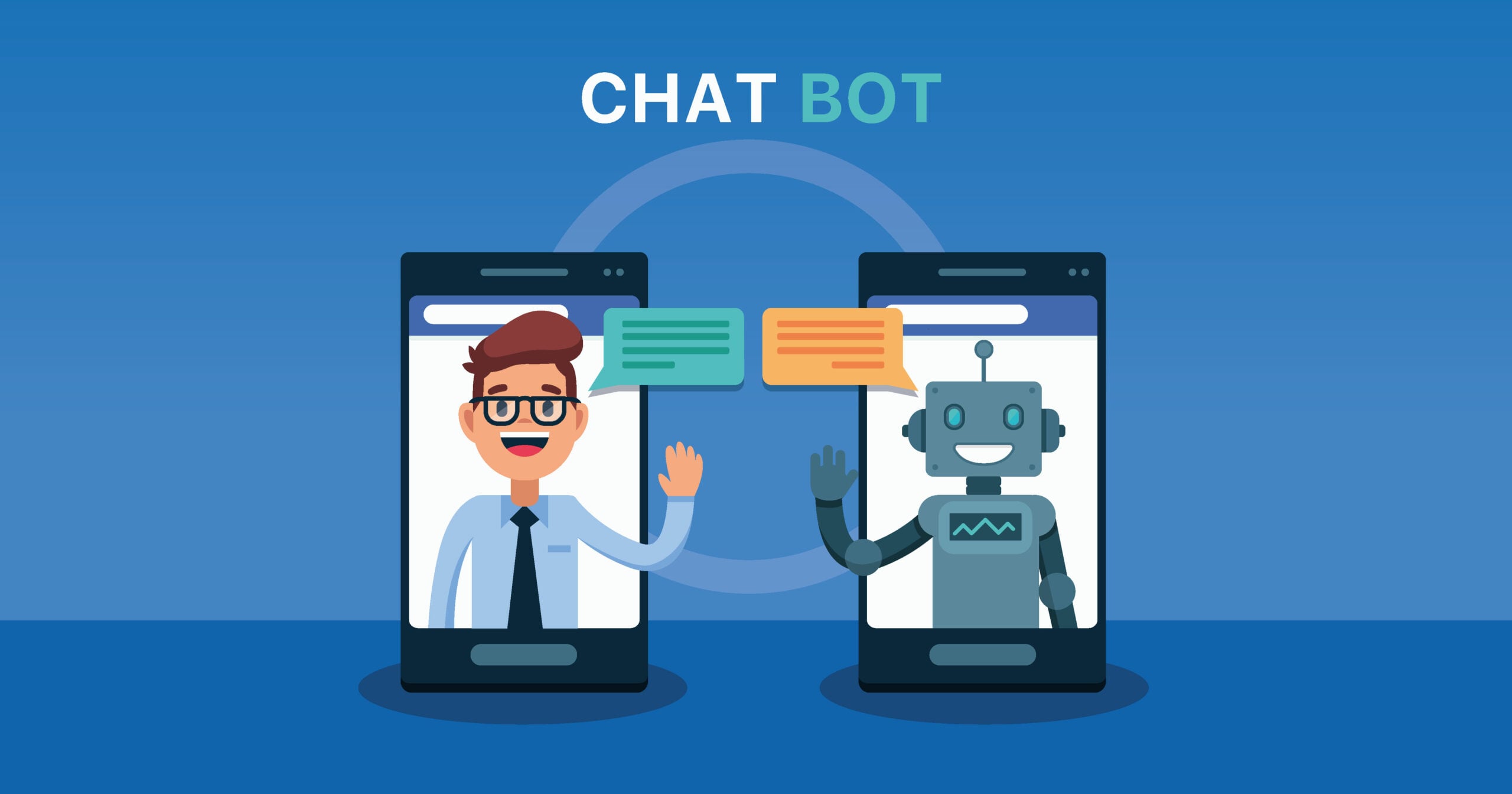
Chatbots use a variety of techniques to mimic conversation. Some chatbots operate on rule-based platforms, responding to human input based on a predefined set of rules. Other chatbots employ machine learning strategies, which allow the chatbot to gain knowledge from human interactions and gradually enhance its capacity to mimic conversation.
| FAQ Resolution Chatbot | Imagine a customer visiting an e-commerce website. They have common questions about shipping, returns, and product specifications. The FAQ resolution chatbot can instantly engage with the customer and answer these questions, providing a seamless customer experience without human intervention. |
|---|---|
| Data Collection and User Feedback Chatbot | After a customer completes a purchase in an online store, a chatbot can initiate a conversation to collect feedback about the shopping experience. It can ask questions about the ease of navigation, product satisfaction, and suggestions for improvement. This data can be valuable for businesses to enhance their offerings. |
| Personalized Product Recommendation Chatbot | When a user logs into their account on a fashion retail website, a chatbot can use their browsing history and purchase behavior to recommend products. For example, suppose the user has previously bought summer dresses. In that case, the chatbot can suggest matching accessories or new arrivals in a similar style. |
| Lead Qualification Chatbot | A B2B company may use a lead generation chatbot on its website to qualify potential leads. When a visitor expresses interest in the company’s services, the chatbot can converse to gather information about the lead’s needs, budget, and timeline. It can then determine whether the charge is a good fit and pass the qualified lead to a sales representative for further engagement. |
Business Insider predicts that chatbots will facilitate $142 billion in consumer retail spending by 2024. So, what are the typical benefits of chatbots for a business?
Compared to emails, chatbots have a far higher message response rate. On average, chatbots achieve an engagement rate of around 10% (measured by the click-through rate for all website visitors). In contrast, email marketing languishes at less than 3%.
Nearly half of digital shoppers expect customer service to respond within 5 minutes. Chatbots are tailor-made for real-time assistance through automated responses that address most customer inquiries.
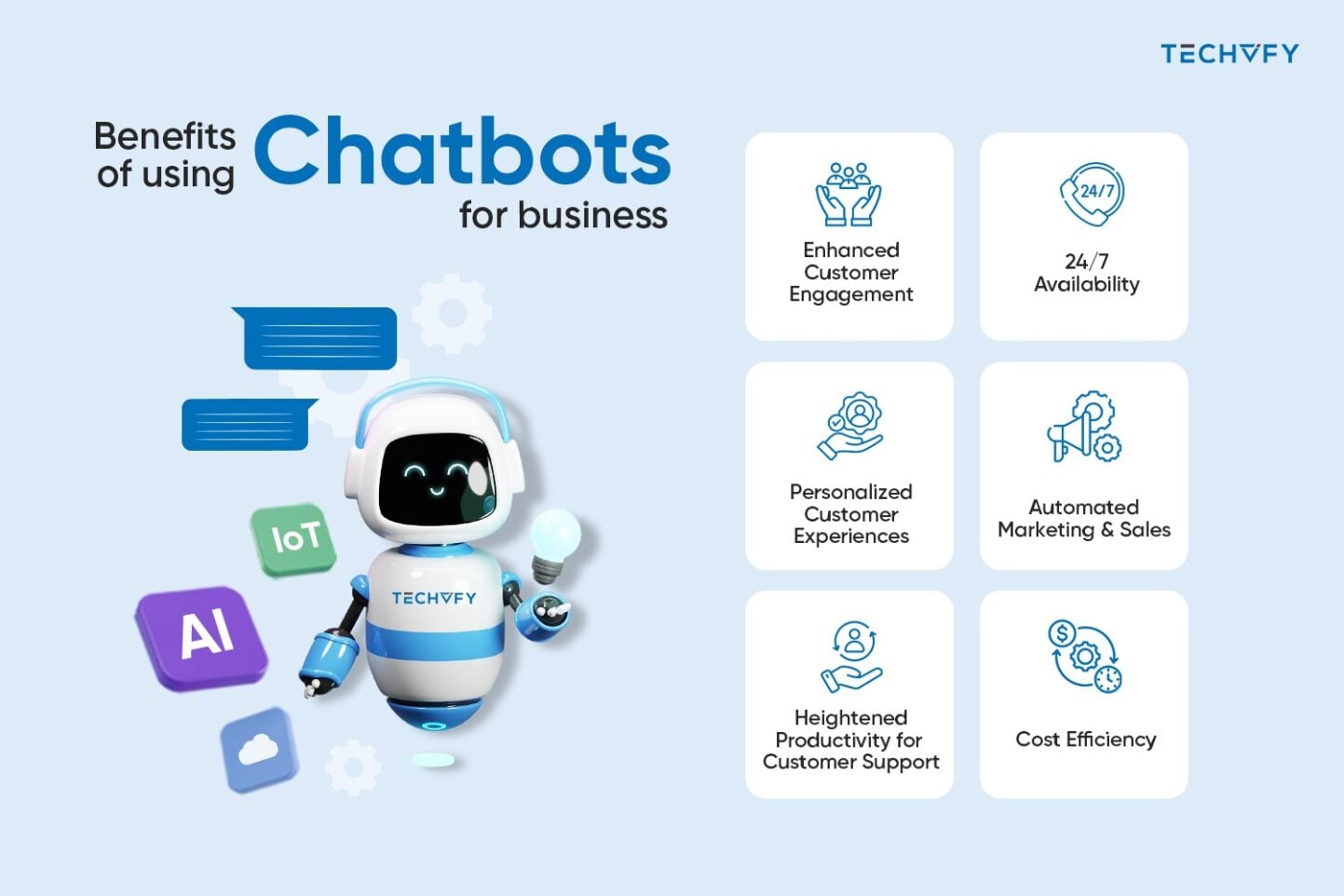
It is simple to set up several chatbots for various customer groups, whether they are brand-new clients, repeat customers, or potential customers who abandon their shopping carts. E-commerce chatbots are excellent at identifying customers, sending tailored messages, and even using first names to address visitors.
Conversational marketing chatbots demonstrate their value in lead generation and social media sales campaigns, improving consumer interactions throughout the sales funnel.
According to Tidio’s 2022 chatbot trends analysis, chatbots can resolve 73% of customer inquiries in five messages or less. Chatbots significantly reduce the effort to support employees by handling frequent issues independently.
Chatbots provide impressive cost-effectiveness and an attractive return on investment from a business standpoint. By 2024, chatbots and virtual assistants will help save $11 billion annually in costs.
Understand more about Chatbots with TECHVIFY:
| Do’s | Don’ts |
|---|---|
| DO let human agents handle complicated inquiries. | DON’T rely solely on chatbots for all interactions. |
| DO give your chatbot a personality with a name, voice, and avatar. | DON’T give your chatbot too much character, which can hinder functionality. |
| DO inform customers about your chatbot’s capabilities and introduce it. | DON’T try to pass your chatbot off as a human; honesty is key. |
| DO use simple and concise language in chatbot responses. | DON’T send large blocks of text that can overwhelm users. |
| DO expect the unexpected and program your chatbot to handle unforeseen situations gracefully. | DON’T overlook the use of buttons to provide options for users. |
Indeed, compared to more giant corporations, small businesses face certain limitations when leveraging the power of chatbots. Therefore, companies need the right approach to overcome obstacles:
In conclusion, chatbots have become practical corporate tools, providing increased consumer interaction, 24/7 accessibility, individualized experiences, and cost-effectiveness. They are essential to lead generation, marketing, and customer service. However, best practices must be followed, such as preserving harmony between automation and human interaction, transparency, and clarity in communication. Businesses should investigate chatbot technology’s potential to spur growth and raise consumer happiness as it develops.
TECHVIFY – Global AI & Software Solution Company
From Startups to Industry Leaders: TECHVIFY prioritizes results, not just deliverables. Accelerate your time to market and see ROI early with high-performing teams, AI (including GenAI) Software Solutions, and ODC (Offshore Development Center) services.

The industry uses chatbots for various purposes, including customer support, lead generation, automating repetitive tasks, and providing personalized recommendations.
The best chatbot for business use depends on specific needs. Popular options include Dialogflow, Amazon Lex, Microsoft Bot, Framework, Rasa, and Landbot.io, but the choice should align with your business objectives.
Which is the best chatbot for small businesses?
Here are a few of the best chatbots for small businesses: HubSpot Chatbot Builder, Landbot, Drift, Tidio, and MobileMonkey.
The four main types of chatbots are rule-based, keyword-based, machine-learning, and voice-based chatbots.